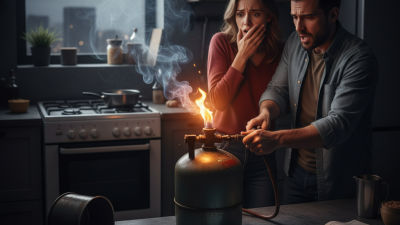
Choosing the right lpg gas hose is a safety decision, not merely a price comparison. Buyers often focus on length, while overlooking pressure rating, temperature range, flexibility, and connection quality. A hose that feels thick may still be unsuitable for LPG service. Material matters more than appearance.
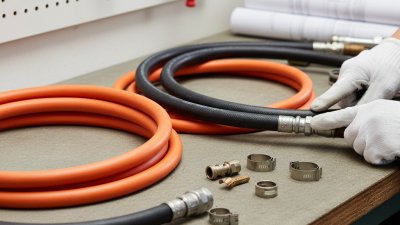
This guide examines common hose types, including reinforced rubber, thermoplastic, and stainless-steel braided designs. Each option behaves differently near outdoor cylinders, commercial cooking equipment, or portable heaters. Rubber hoses usually offer flexibility and simple handling. Thermoplastic versions can resist weathering and abrasion in demanding settings. Braided hoses provide added protection, but their fittings still require careful inspection.
Small details matter.
We will compare construction, expected service conditions, installation needs, and maintenance concerns. The most suitable choice depends on the appliance, environment, movement, and local safety requirements. Buyers should verify markings, compatible fittings, and certification from a reputable manufacturer. A qualified professional should confirm the final installation.
Some product descriptions remain confusing. “Universal” does not always mean suitable for every LPG system. This is where careful questioning helps. Check the hose’s intended gas service, working pressure, bend limits, and replacement interval. Do not rely on color alone. Even experienced buyers can miss a weak fitting or an aging outer cover.
The goal is practical guidance. You should finish with a clearer way to compare hose types, identify trade-offs, and avoid purchasing based on appearance alone. Safety deserves more than a quick glance.
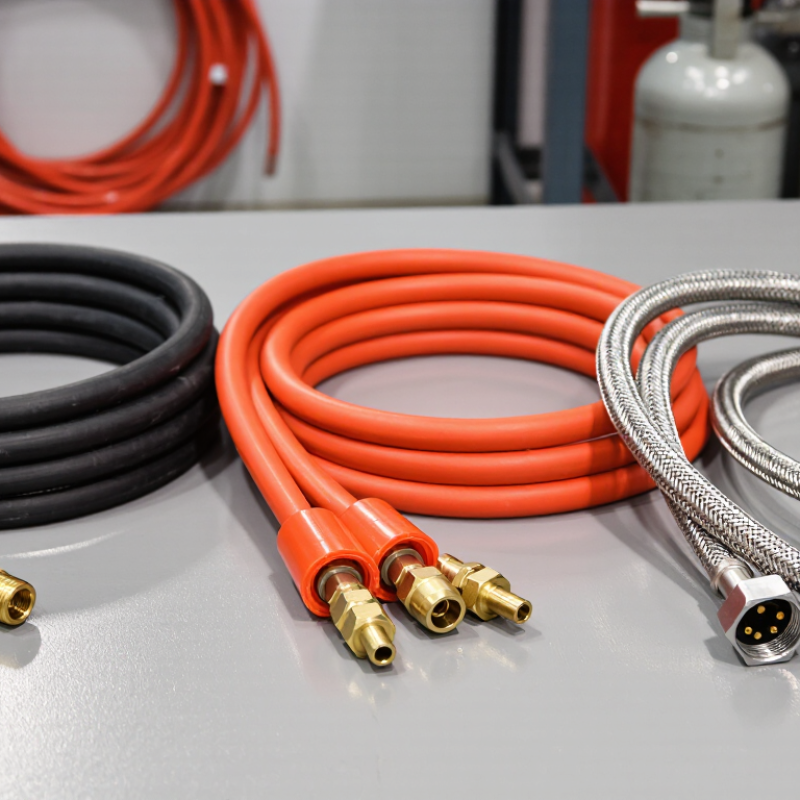
LPG gas hoses look simple, but selection begins with service conditions. The WLPGA’s 2024 Statistical Review places global LPG demand at about 331 million tonnes in 2023. That scale explains why small connection failures deserve serious attention. Common types include low-pressure rubber hoses, thermoplastic hoses, and stainless-steel-braided flexible connectors. High-pressure transfer service needs a hose specifically rated for liquid LPG. Appliance service usually needs a different construction. They are not interchangeable.
Buyers should read the hose marking, not trust appearance. Check working pressure, temperature range, LPG compatibility, length, bend radius, and fitting type. The hose must match the appliance and regulator connection. Look for recognized conformity marking and an applicable product standard, such as EN 16436-1 for LPG appliance hoses. NFPA 58 also requires listed hose assemblies suitable for LP-Gas service.
A bright outer cover proves little. A hose can feel flexible and still be aged, chemically damaged, or incorrectly fitted.
During inspection, flex the hose gently. Examine cracks, blisters, flattening, exposed braid, and loose fittings. Keep it away from heat, sharp edges, standing water, and repeated twisting. Replace it when the specified service life ends, or sooner after visible damage. Installation records help, though many buyers skip them. That is a weakness. Measure before ordering. Extra length can loop near heat, while too little length can strain the connector. A qualified professional should install and test the selected assembly.
LPG hoses differ in materials, flexibility, pressure tolerance, and connection design. Their construction matters because gas lines may face heat, movement, vibration, and outdoor exposure.
Rubber LPG hoses usually contain a gas-resistant inner tube, a textile reinforcement layer, and an outer cover. The inner tube carries the gas, while the reinforcement limits expansion. The outer layer helps resist abrasion, sunlight, and moisture. These hoses are flexible and practical for movable appliances. However, flexibility does not mean unlimited durability. Cracks can appear near bends and fittings.
Thermoplastic hoses are lighter and often resist chemicals and weather well. Their smooth inner surface can support steady gas flow. Some flexible metal hoses use a corrugated stainless-steel core with an outer braid. This design handles movement and higher mechanical stress, but sharp bending can damage the corrugations. Pigtail hoses commonly combine a flexible tube with reinforced end fittings. Construction quality at these joints is critical.
Tips: Match the hose to LPG service, pressure, temperature, and connection type. Check markings and technical documents before installation. Keep the hose away from flames, sharp edges, and tight bends. Inspect it regularly for bulges, cuts, stiffness, or unusual odor. Replace damaged hose promptly, and use qualified personnel for installation. A common mistake is judging quality by thickness alone. The fitting, reinforcement, and material compatibility matter just as much. No hose suits every setup.
| LPG Hose Type | Typical Construction | Common LPG Service | Typical Nominal Bore Range | Key Performance Characteristics | Common Standards or Requirements | Best-Fit Buying Considerations |
|---|---|---|---|---|---|---|
| Reinforced Rubber LPG Hose |
|
Vapor-phase LPG connections, cylinders, regulators, appliances and short flexible service lines. | Commonly about 6–25 mm, depending on the equipment and connection design. |
|
Often designed and tested to applicable rubber or plastic LPG hose requirements, such as EN 16436-1 for hoses used with LPG in the vapor phase. National gas regulations also apply. | Check the hose marking, gas-phase rating, working-pressure rating, temperature range, bend radius and compatibility with the intended regulator or appliance. |
| Thermoplastic LPG Hose |
|
Portable LPG equipment, appliance connections, cylinder assemblies and applications where low weight is important. | Commonly about 5–20 mm for appliance and cylinder connections. |
|
Products may be manufactured to EN 16436-1 or equivalent national requirements for LPG vapor hose assemblies. | Confirm resistance to LPG constituents, ultraviolet exposure, abrasion and the minimum service temperature. Do not substitute a general-purpose pneumatic or water hose. |
| Stainless-Steel Braided LPG Hose |
|
Appliance connections, commercial kitchen equipment and areas requiring increased protection against abrasion or accidental impact. | Commonly about 6–25 mm for appliance and equipment connections. |
|
Must comply with the applicable appliance-connector or LPG hose assembly standard in the installation country; the complete assembly, not only the braid, must be approved. | Inspect the inner hose, braid, fittings and crimp area. Avoid twisting, sharp bends and using the braid as a load-bearing support. |
| Corrugated Stainless-Steel Gas Hose |
|
Fixed or semi-fixed LPG appliance connections, especially where resistance to heat, rodents or mechanical damage is required. | Commonly about 10–32 mm for building and appliance connection systems. |
|
Applicable building-gas and appliance-connector standards vary by country. Installation must follow the approved system instructions and local gas code. | Use only where the assembly is specifically rated for LPG. Do not repeatedly bend, flatten, cut or field-modify the corrugated tube. |
| Composite LPG Transfer Hose |
|
Bulk transfer of liquid or vapor LPG at storage, cylinder-filling, road-tanker and marine-transfer facilities. | Commonly about 25–100 mm, with larger sizes available for high-flow transfer systems. |
|
Commonly manufactured to EN 1762 or equivalent standards for rubber hoses and hose assemblies used for LPG in liquid or gaseous phase, subject to the product design and certification. | Verify liquid-LPG approval, pressure rating, electrical continuity, minimum bend radius, coupling type, hose length and inspection interval. |
| Rubber LPG Transfer Hose |
|
Liquid or vapor LPG transfer, including loading, unloading and filling operations when specifically certified for the duty. | Commonly about 19–100 mm, selected according to required flow and pressure. |
|
Often associated with EN 1762 or equivalent national and international LPG transfer-hose requirements. The hose assembly must be tested with its fittings. | Check working pressure, test pressure, burst pressure, electrical continuity, cover condition, coupling retention and documented inspection history. |
| Metal Flexible LPG Hose |
|
Industrial LPG vapor or liquid service, high-temperature areas and installations requiring strong resistance to permeation or external damage. | Commonly about 10–100 mm, depending on flow, pressure and installation design. |
|
Applicable metallic-hose, pressure-equipment and LPG installation standards depend on the service and jurisdiction. | Confirm material compatibility, fatigue life, vibration suitability, pressure rating, electrical bonding and whether the assembly is approved for liquid LPG. |
| Low-Permeation LPG Hose |
|
Indoor appliance connections, enclosed cabinets, recreational vehicles and other locations where limiting gas diffusion is important. | Commonly about 5–16 mm for appliance and equipment connections. |
|
Must meet the applicable low-permeation, LPG appliance and installation requirements in the destination market. | Prioritize certified gas compatibility, permeation performance, temperature rating, fitting security and the replacement date or service-life requirement. |
Choosing an LPG hose starts with material, not appearance. Rubber hoses remain popular because they bend easily and tolerate outdoor handling. Thermoplastic hoses are lighter and often resist oil, abrasion, and ultraviolet exposure better. Stainless-steel braided assemblies offer strong mechanical protection, but they may hide internal damage. A hose can look excellent and still be unsafe.
Pressure ratings require careful reading. A household appliance may use low-pressure LPG, while cylinder filling and transfer equipment need much higher ratings. Never confuse working pressure with burst pressure. NFPA 58, 2024 edition, requires LP-Gas hose assemblies to be approved for their specific service. The supplier should state working pressure, test pressure, gas compatibility, and connection type. A higher number is not automatically safer.
Temperature limits are equally important. EN 16436-1 covers LPG vapor-phase hoses and lists service temperatures commonly ranging from −30°C to +70°C, depending on the hose category. In direct sunlight, a dark hose can become noticeably hotter than surrounding air. Cold weather also reduces flexibility and can expose weak bends. Check the hose near both fittings, where cracking often begins. Replace it when the surface becomes stiff, blistered, or deeply weathered. One limitation remains: standards describe tested performance, not every real installation. A short hose near a hot appliance still needs extra clearance.
This chart compares representative maximum working pressures and usable temperature spans for common non-brand-specific LPG hose constructions. Actual limits depend on hose design, applicable standards, fittings, and service conditions.
| Hose construction | Typical working pressure | Representative temperature limit | Typical buyer consideration |
|---|---|---|---|
| NBR/PVC composite | 20 bar | −30°C to +70°C | Flexible and widely used for general LPG service |
| Thermoplastic elastomer | 25 bar | −40°C to +80°C | Lightweight with good resistance to weathering |
| Stainless-steel braided flexible hose | 25 bar | −60°C to +200°C | High temperature capability and strong external protection |
Values are representative ranges compiled from common LPG hose specifications. Buyers should verify the product’s certified working pressure, gas compatibility, temperature rating, bend radius, and local compliance requirements before selection.
What Are the Top LPG Gas Hose Types for Buyers?
Buyers should match the hose to LPG vapor pressure, temperature, movement, and installation length. Rubber LPG hoses are flexible and practical for cooking appliances, heaters, and removable cylinders. Thermoplastic hoses resist weathering and can offer a lighter alternative. Stainless-steel braided hoses provide strong mechanical protection, but they still need correct internal seals and approved end fittings.
Safety comes before appearance.
EN 16436-1 covers non-metallic hoses for LPG vapor-phase applications, including pressure and temperature performance. EN 16129 addresses regulators and related LPG equipment, so the hose, regulator, and appliance should be assessed as one system. In North America, buyers should look for hose assemblies certified to the applicable gas-appliance connector requirements. NFPA 58 also emphasizes listed equipment, protected routing, and prevention of physical damage. A hose marked only “gas compatible” is not enough.
Fitting compatibility is often overlooked. Check thread type, nominal size, connection gender, working pressure, and sealing method. Do not force a metric fitting onto an imperial valve. Never mix a disposable-cylinder connector with a fixed-cylinder connection without verified approval.
NFPA’s Fire Loss in the United States During 2023 reported about 1.5 million fires and 29.1 billion dollars in property damage. That figure is not specific to LPG hoses, but it shows why small installation errors deserve attention.
In practice, I would replace cracked, hardened, twisted, or heat-discolored hoses immediately, even when the stated service life remains. Some labels are confusing. A qualified technician should verify uncertain assemblies.
When choosing an LPG gas hose, start with the application, not the price. Global LPG demand exceeded 330 million tonnes in 2023, according to the World LPG Association’s 2024 Statistical Review. That scale reflects diverse uses, from outdoor cooking to commercial heating. Each setting needs a different hose construction. Reinforced rubber hoses suit flexible connections and moderate movement. Thermoplastic hoses are lighter and resist weathering. Stainless-steel braided hoses offer stronger protection near heat or frequent handling.
Pressure and temperature ratings must match the equipment label. Check the hose’s working pressure, minimum bending radius, and LPG compatibility. ISO 3821 covers rubber and thermoplastic hoses for gas welding equipment, while EN 16436-1 addresses LPG hoses for appliances. These references help, but they do not replace application testing. A hose beside a hot burner needs greater heat resistance than one behind a cool cylinder.
Inspect the connection carefully. Threads, clamps, and seals must fit without force. Keep the hose away from sharp edges, standing water, and excessive bends. Shorter is usually safer, but not always practical. I have seen installers choose a hose that was technically rated correctly but too stiff for the appliance movement. That mistake matters. Replace hoses showing cracks, swelling, stiffness, or damaged braiding. Follow the inspection intervals recommended by the equipment maker and local authority. Fresh-looking is not the same as reliable.