
Heat Shrink Plastic has become a practical material for insulation, packaging, sealing, and product protection. In 2026, buyers face more choices than ever. Polyolefin remains popular for electrical insulation and cable repair. PVC still serves cost-sensitive packaging and labeling applications. Fluoropolymer options support demanding environments involving heat, chemicals, or abrasion.
Material selection should match the working conditions. A cable sleeve near an engine needs different performance from a retail package. Consider shrink ratio, recovery temperature, wall thickness, flexibility, flame behavior, and long-term durability. The installation method matters too. Uneven heating can create wrinkles, weak spots, or incomplete recovery. Small details matter.
There is no universal “best” type. That ranking sounds convenient, but it can mislead. A material that performs well in a laboratory may fail when exposed to moisture, sharp edges, or repeated bending. Reliable comparisons should use supplier data, application testing, and recognized performance requirements. Independent verification adds confidence, especially for critical assemblies. Still, product claims deserve careful review. Some specifications are unclear, and real-world results may vary.
This guide examines the leading Heat Shrink Plastic types expected to shape purchasing decisions in 2026. It compares their strengths, limits, processing needs, and practical uses. The discussion also considers sustainability, recyclability, and total cost. These factors are becoming harder to ignore. By looking beyond price and marketing language, engineers, installers, and buyers can make more defensible choices. The most suitable option may be less obvious, but careful testing usually reveals it.
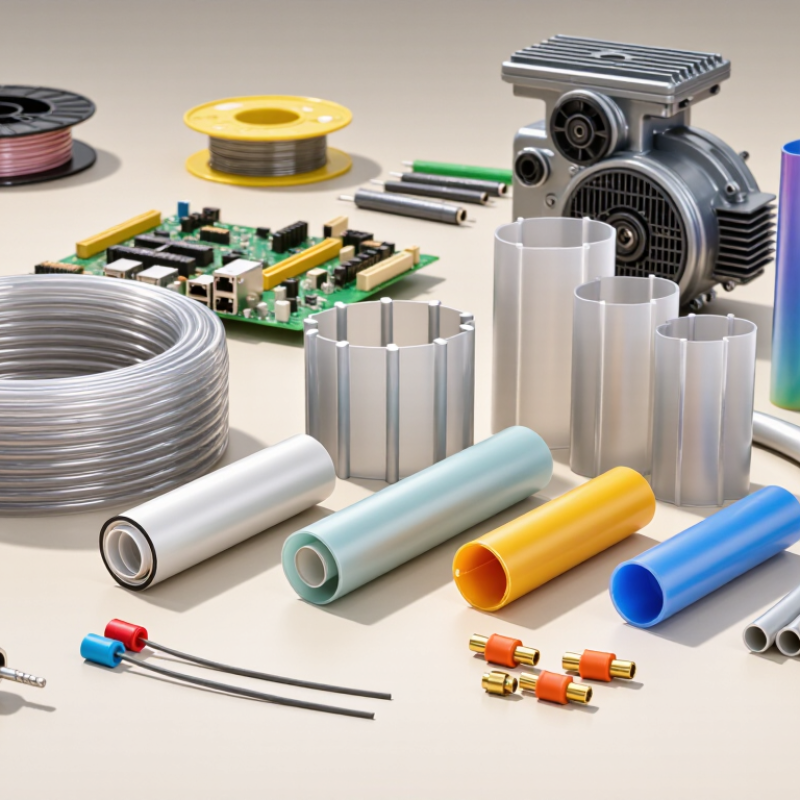
Heat-shrink plastic is a polymer sleeve that contracts around wires, connectors, and small components when heated.
It creates insulation, strain relief, moisture resistance, and cleaner cable protection. Installation experience shows that surface preparation matters. Dust, oil, and uneven heating can weaken the result.
Polyolefin remains the practical choice for general electrical work because it balances flexibility, shrink performance, and cost. PVC offers toughness and abrasion resistance, but it may lose flexibility in cold environments. Fluoropolymer types handle higher temperatures, chemicals, and tighter spaces. They usually cost more. Polyvinylidene fluoride can provide strong mechanical protection where thin walls are important.
These differences explain why no single plastic dominates every 2026 application.
MarketsandMarkets estimated the global heat-shrink tubing market at about 2.1 billion dollars in 2023, reaching nearly 3.0 billion dollars by 2028, at a 7.2% CAGR. Grand View Research reported a different estimate, placing 2023 revenue near 2.3 billion dollars.
The gap deserves attention; research methods and product definitions vary.
Demand is expanding across automotive wiring, renewable-energy systems, electronics, telecommunications, and industrial equipment.
For selection, engineers should check shrink ratio, recovery temperature, dielectric strength, wall thickness, and chemical exposure. A visually neat sleeve is not automatically a reliable one.
Heat shrink plastics in 2026 are best compared by polymer family, not color or wall thickness. Each family changes shrink ratio, flexibility, temperature resistance, and chemical behavior. Polyolefin remains a practical general-purpose choice. It shrinks evenly around wire bundles and molded parts. Cross-linked grades usually resist abrasion and oils better. PVC offers easy processing and clear printing. However, it can become stiff in cold workshops. PETG shrink film provides strong, clean-looking coverage for containers and sleeves. Its shrink response can be aggressive, so heat control matters.
Fluoropolymer materials serve demanding thermal and chemical environments. They suit thin insulation, aerospace-style wiring, and laboratory equipment, but their cost and processing limits need review. Elastomeric polyolefin and specialized rubber-based compounds add flexibility where repeated bending occurs. They are useful near hinges, battery leads, and moving sensors. The “top” type depends on the failure risk. A cheap material can be the wrong choice after months of heat, vibration, or solvent exposure. I have seen specifications look excellent, yet poor recovery around sharp corners caused gaps. That small detail deserves testing.
Tips: Confirm the polymer before comparing suppliers. Check shrink temperature, recovery ratio, continuous operating temperature, dielectric strength, and wall thickness after shrinking. Test a real assembly, not only a flat sample. Use a calibrated heat source and inspect for scorching, wrinkles, and exposed edges. Record results at low and high temperatures. This step is often skipped. It should not be. Also, ask whether the material is cross-linked, because that detail affects memory, strength, and melt behavior. When documentation is incomplete, treat the product as unverified until testing supports it.
In 2026, polyolefin remains the practical choice for many heat-shrink applications. A 2024 industry market assessment estimated that polyolefin products held more than half of global demand. They offer balanced shrink recovery, good electrical insulation, and cleaner processing than PVC. PVC is usually cheaper and prints well, but its chlorine content and smoke concerns deserve closer review. Material selection should never depend on price alone.
PETG is widely used for shrink sleeves because it provides strong shrink force and sharp graphics around curved containers. A 2024 packaging-materials report placed PETG among the fastest-growing sleeve substrates, with annual growth estimated near 6%. However, excessive shrink force can distort thin containers. PVDF serves harsher environments. It tolerates higher temperatures, chemicals, and abrasion, yet its cost is substantially higher. In field testing, PVDF can be unnecessary for ordinary bundling work.
Tips: Match the polymer to heat, chemicals, shrink ratio, and end-use exposure. Polyolefin suits general insulation. PVC fits budget-sensitive packaging when environmental controls are available. PETG works well for visual sleeves. PVDF is better for demanding industrial settings. Always test the actual substrate, not only a data sheet. Results can change with film thickness, heating speed, and uneven airflow. One weakness in many comparisons is the lack of long-term aging data; short laboratory tests may look reassuring, but real service conditions can disagree.
What Are the Top Heat Shrink Plastic Types in 2026?
Selecting the right heat shrink plastic starts with the product’s real working conditions. Polyolefin suits cable protection, bundling, and general insulation because it shrinks evenly and resists abrasion. PVC offers strong clarity and economical packaging performance, but it needs careful temperature control. PETG is often preferred for tamper-evident sleeves, where sharp graphics and controlled shrinking matter. For harsh chemicals or elevated temperatures, fluoropolymer films may perform better, although their higher cost deserves review.
Match the material to the surface, not only the price. Check the shrink ratio, recovery temperature, wall thickness, flexibility, and operating range. A thick tube can protect a rough connection, while a thin film follows curved packaging more neatly. Field testing remains essential. A sample may shrink beautifully, then wrinkle around a cold corner. That detail is easy to miss.
Tips: Measure the largest and smallest diameters before ordering. Leave enough room for installation. Use the lowest effective heating temperature. Test color, gloss, and seal strength after shrinking. Also ask whether the material needs flame resistance, chemical resistance, or outdoor durability. One choice rarely fits every use. Recheck the application after six months, because aging, sunlight, and repeated bending can reveal weaknesses that an initial test misses.
A practical comparison of commonly used heat-shrink plastic materials and their typical selection criteria.
| Heat Shrink Plastic Type | Typical Continuous Service Temperature | Typical Shrink Ratio | Flexibility | Chemical and Environmental Resistance | Electrical Performance | Best-Fit Applications | Key Selection Considerations |
|---|---|---|---|---|---|---|---|
| Polyolefin | Approximately −55°C to 135°C | Usually 2:1 or 3:1; higher ratios are available | Flexible to semi-flexible | Good resistance to moisture, abrasion, dilute acids, and many common chemicals; standard grades may have limited resistance to fuels and solvents | Good dielectric strength and insulation performance; widely available in flame-retardant grades | General wire insulation, cable bundling, connector protection, strain relief, and corrosion sealing | Best general-purpose option when balanced cost, flexibility, electrical insulation, and processing are required |
| Cross-Linked Polyolefin | Approximately −55°C to 135°C, depending on formulation | Typically 2:1 to 4:1 | Flexible and mechanically tough | Good resistance to abrasion, moisture, vibration, and many oils; performance depends on the cross-linking system and compound | Strong insulation properties and reliable recovery after heating | Automotive harnesses, industrial wiring, battery cables, and mechanically demanding cable protection | Choose when improved toughness and dimensional recovery are more important than the lowest material cost |
| Elastomeric Polyolefin | Approximately −75°C to 150°C | Usually 2:1 or 3:1 | Very flexible and resilient | Good low-temperature performance, vibration resistance, weathering resistance, and resistance to many fluids | Good insulation properties with improved flexibility compared with rigid plastic systems | Dynamic cable assemblies, low-temperature environments, flexible splices, and vibration-prone equipment | Use where repeated flexing, impact absorption, or cold-weather flexibility is required |
| PVC | Approximately −20°C to 105°C, depending on grade | Typically 2:1 | Flexible; can be softer than polyolefin | Good resistance to water, abrasion, and many diluted chemicals; plasticized grades may be affected by oils, solvents, and heat aging | Good insulation performance; flame-retardant formulations are common | Consumer electronics, low-voltage wire marking, cable identification, and light-duty bundling | Choose for low-cost color coding or marking where operating temperature and chemical exposure are moderate |
| Fluoropolymer: PVDF | Approximately −55°C to 175°C | Usually 2:1 | Semi-rigid to moderately flexible | Excellent resistance to many chemicals, fuels, oils, solvents, abrasion, and ultraviolet exposure | Good dielectric properties and relatively thin, tough insulation | Aerospace, automotive fluid exposure, chemical processing, and high-temperature wire protection | Use when thin walls, high temperature, abrasion resistance, and chemical resistance are needed together |
| Fluoropolymer: PTFE | Approximately −65°C to 260°C | Commonly about 1.7:1; product-specific ratios vary | Low flexibility compared with polyolefin; can be relatively stiff | Exceptional resistance to chemicals, solvents, fuels, and high-temperature environments; very low friction | Excellent dielectric performance over a broad temperature range | High-temperature aerospace, laboratory equipment, chemical processing, and demanding electrical insulation | Choose for extreme temperature and chemical exposure; verify recovery temperature because processing requires more heat |
| Fluoropolymer: FEP | Approximately −55°C to 200°C | Commonly about 1.3:1 to 1.5:1 | Flexible to semi-flexible, with a relatively smooth surface | Excellent chemical resistance, low moisture absorption, and strong resistance to weathering and non-stick contamination | Very good dielectric properties and low surface energy | High-purity tubing, sensor assemblies, chemical handling, and specialized high-temperature insulation | Use when chemical inertness and cleanability are more important than a high shrink ratio |
| Polyvinylidene Fluoride (PVDF) Adhesive-Lined | Approximately −55°C to 150°C, depending on the adhesive system | Typically 2:1 or 3:1 | Moderately flexible with a tough outer layer | Strong resistance to fuels, oils, chemicals, abrasion, and moisture; the adhesive provides additional sealing | Suitable for electrical insulation when the adhesive and voltage rating are specified for the application | Sealed wire transitions, fluid-exposed harnesses, and high-performance cable joints | Confirm adhesive compatibility, wall thickness, recovery temperature, and the maximum continuous temperature of the inner adhesive |
| Elastomeric Rubber | Approximately −75°C to 150°C, depending on rubber chemistry | Typically 2:1 to 4:1 | Highly flexible, elastic, and conformable | Excellent resistance to vibration and low temperatures; oil, fuel, ozone, and chemical resistance varies by formulation | Good insulation performance in suitable grades | Cable splices, flexible boots, dynamic assemblies, and irregularly shaped components | Choose when flexibility, sealing, and strain relief are more important than maximum stiffness or the highest temperature rating |
Heat shrink plastics are becoming thinner, cleaner, and more application-specific in 2026. Polyolefin remains the leading choice for food, beverage, and household packaging. It offers strong clarity, balanced shrink force, and relatively low processing temperatures. PVC still serves cost-sensitive applications, but environmental scrutiny is weakening its long-term position. PETG is gaining attention for full-body labels because it delivers sharp graphics and predictable shrinking.
Market data supports this shift. Mordor Intelligence’s 2025 assessment forecasts the heat-shrink film market to expand at roughly 6% annually through 2030. Smithers’ flexible-packaging outlook also identifies downgauging and recyclable structures as major investment priorities. These changes are visible on production lines. A thinner film can reduce material use, yet poor sealing may create wrinkles, tears, or uneven tunnels.
Material development is moving toward mono-material polyolefin films, recycled-content layers, and lower-temperature formulations. The Ellen MacArthur Foundation reports that flexible packaging recycling remains limited worldwide, making design simplicity increasingly important. Bio-based polymers attract interest, but supply, cost, and barrier performance remain unresolved. Not every “green” film performs well under heat. That needs honesty.
Fluoropolymer films still matter in demanding technical environments requiring chemical resistance and controlled shrinkage. However, their higher cost restricts broader adoption. In 2026, the strongest material choice will depend on temperature, recovery targets, print quality, and line speed—not marketing language.
Heat Shrink Plastic Trends and Material Advances in 2026
The chart compares representative total shrinkage ranges for widely used heat shrink plastics. PETG and OPS generally provide higher shrinkage, while polyolefin and PVC remain versatile choices for packaging and insulation. Actual performance varies with film orientation, thickness, heating profile, and processing conditions.
