
Choosing among China’s leading Ammonium Sulfate Nitrogen suppliers takes more than comparing quoted prices. Buyers need to assess product specifications, production consistency, export experience, and responsiveness. A polished brochure is not proof of a reliable batch. Details matter.
Ammonium sulfate is commonly sold as granular or crystalline fertilizer, often with about 21% nitrogen and 24% sulfur; confirm each supplier’s current specification and certificate of analysis. Ray R. Weil, a soil scientist and co-author of a widely used soil science textbook, emphasizes soil conditions and nutrient management in his work. A concise paraphrase of that principle is: “Match nutrient inputs to soil conditions and crop needs.” It is a useful reminder, not a supplier endorsement.
This guide introduces Chinese suppliers and the practical checks buyers can make before requesting samples or quotations. Compare recent batch test results, particle size, moisture limits, packaging options, and lead times. Ask whether the quoted grade matches the intended crop and application method. Then verify that the documents describe the same product being offered. Small mismatches can matter.
Supplier rankings also deserve scrutiny. Public information may be incomplete, and production capacity alone does not prove consistent quality. Treat the shortlist as a starting point, request current evidence, and compare responses carefully. A little skepticism helps.
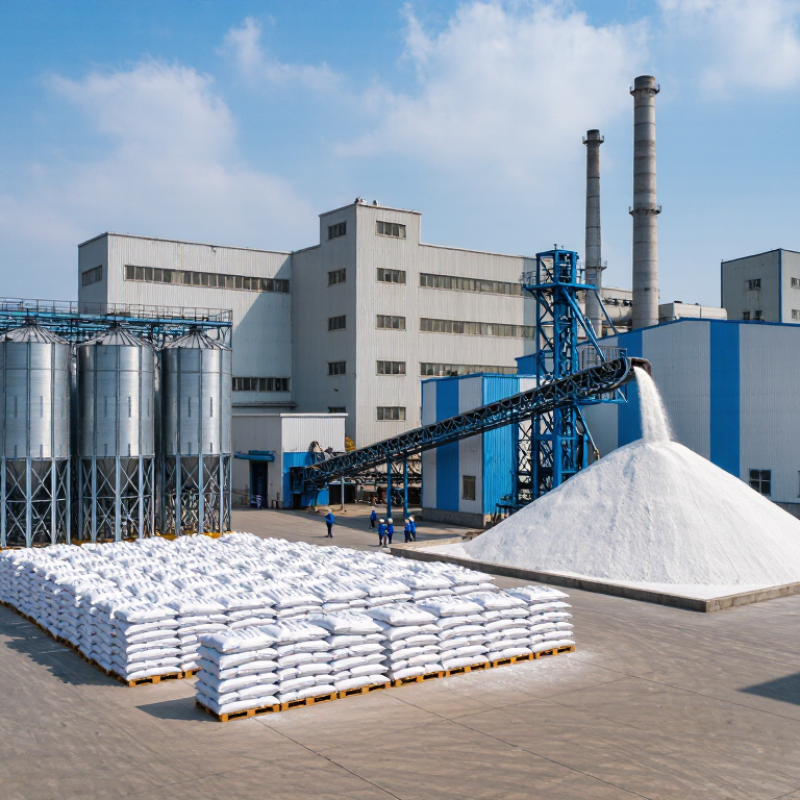
Ammonium sulfate is a nitrogen fertilizer that also supplies sulfur, two nutrients involved in plant growth. Its typical analysis is about 21 percent nitrogen and 24 percent sulfur, though product specifications should be checked. The nitrogen is ammonium-based, while the sulfur is present as sulfate, a form roots can absorb. That pairing matters.
In crops such as wheat, canola, and onions, adequate sulfur supports protein formation and efficient nitrogen use. Ammonium sulfate can be useful where soil tests show low sulfur or where alkaline soils limit some nutrients. It does not suit every field. Repeated use may gradually lower soil pH, especially in already acidic soils. Rates should reflect local tests and crop demand.
Farmers evaluating suppliers can compare nutrient analysis, granule consistency, moisture condition, and batch documentation. Storage matters, too: keep fertilizer dry and sealed, since damp product can cake and spread unevenly. A calibrated spreader helps apply it evenly across a field. Still, field conditions are messy. A recommendation that works on one soil may need adjustment on another.
China’s ammonium sulfate supply chain begins largely at industrial sites, not dedicated fertilizer mines. Steelmakers recover ammonia from coke-oven gas, while chemical plants generate ammonium sulfate as a by-product. Producers then crystallize or granulate it, test moisture and nitrogen content, and arrange bulk or bagged transport. The material may travel by truck to nearby blending plants or by rail and port for export. Small handling details matter: damp granules can cake during storage.
Trade data show the scale. China Customs records, available through UN Comtrade under HS code 310221, place China’s 2023 ammonium sulfate exports above eight million tonnes. That volume connects domestic by-product plants with overseas importers through exporters, inspection services, warehouses, and port terminals. The trade figure does not reveal every supplier’s capacity or product consistency. It is a useful map, not a quality guarantee.
Buyers usually assess nitrogen and sulfur content, particle size, moisture, and shipment timing. Fertilizer-grade material commonly contains about 21% nitrogen and 24% sulfur, though specifications vary by product and contract. A producer near a chemical complex may offer steady output, while a trader can consolidate cargo from several plants. Convenient, but traceability may be less direct. Ask for recent analysis certificates and confirm whether the quoted grade matches the delivered material. I would not assume two white, free-flowing samples perform identically.
China’s ammonium sulfate suppliers generally fall into three groups: integrated chemical producers, fertilizer manufacturers, and trading companies. Integrated plants often recover the material as a by-product of caprolactam or coke-oven processing. Their output can be steady, but product form and specifications may differ between production lines. Fertilizer manufacturers may offer granulated material suited to bulk handling, while traders can combine supply from several plants. That matters.
Production is concentrated around chemical and industrial clusters rather than evenly spread across the country. Shandong, Henan, and Jiangsu have substantial fertilizer and chemical activity; Shanxi and Inner Mongolia are associated with coal and coking industries. These are useful starting points, not guarantees of current capacity. A province name alone proves little. Buyers should check the actual plant origin, recent production schedule, nitrogen content, moisture, free acidity, and granule size. Ask for a recent certificate of analysis and compare it with an independent sample where practical. I would be cautious about assuming that a low quoted price means a better deal; freight, packaging, and batch consistency can change the real cost. Check the details.
Assess suppliers against a written specification, not a sales claim. Confirm nitrogen content, sulfur level, moisture, particle size, and appearance suit your application. Ask for a recent certificate of analysis, then compare it with an independent lab result from a sealed sample. One sample is not enough. Request results from several production lots, since consistency matters more than a polished brochure.
Check production controls and complaint handling. Ask about raw-material traceability, batch coding, equipment calibration, and retained samples. If practical, arrange a site audit or third-party inspection before shipment. Review packaging too: bag weight, liner condition, pallet stability, and moisture protection during transport. Clear answers matter. I would also check that sales, technical, and logistics contacts provide consistent information. It can feel awkward, but it may expose gaps early.
Tips: Start with a small trial order and set acceptance limits in writing. Photograph sealed bags on arrival, record lot numbers, and test the material before wider use. Compare product quality and paperwork over time. A low quote may cost more if particle size varies or bags arrive damp. Even careful checks cannot remove every risk.
When comparing ammonium sulfate nitrogen suppliers in China, ask for a recent certificate of analysis tied to the actual production lot. Check nitrogen content, moisture, sulfur content, acidity, and particle size against your purchase specification. A neat certificate is useful, but it is not the same as a test. For a new supplier or a large order, arrange representative sampling and independent laboratory testing before shipment. Keep samples sealed. Record the lot number and sampling date, since results are harder to interpret without them.
Export preparation deserves equal attention. Confirm whether the product is granular or crystalline, and check that the packaging suits your handling equipment and storage conditions. Moisture-resistant bags, secure stitching, and legible lot labels can prevent avoidable problems at arrival. Request draft shipping documents early, including the commercial invoice, packing list, certificate of origin, and product test documents where required. Verify destination-specific import and labeling requirements with your customs broker; requirements can change. Agree in writing on inspection timing, loading photos, shipment terms, and how discrepancies will be handled. Small details matter. I would not rely on photos alone, though they can reveal damaged bags or inconsistent marking. A careful checklist helps, but it cannot replace clear communication and a realistic review of each shipment.
