Top Tips for Choosing the Right Propane Nozzle for Your Needs?
Choosing the right propane nozzle is essential for safety and efficiency. The propane industry is projected to grow by over 4% annually. This growth reflects a rising demand for propane as a versatile fuel source. Your choice of a propane nozzle can impact both performance and safety.
Each nozzle has specific applications, often determined by size and type. For instance, residential uses may require a different nozzle compared to industrial ones. Many users overlook these details, which can lead to improper fueling or leaks. Reports indicate that equipment failures often stem from incorrect nozzle selection.
Realizing that not every nozzle fits every need is crucial. You may save costs upfront but risk safety and performance. Understanding your requirements ensures you avoid common pitfalls. Carefully selecting a propane nozzle can enhance efficiency and reduce hazards in the long run.
Understanding Different Types of Propane Nozzles Available in the Market
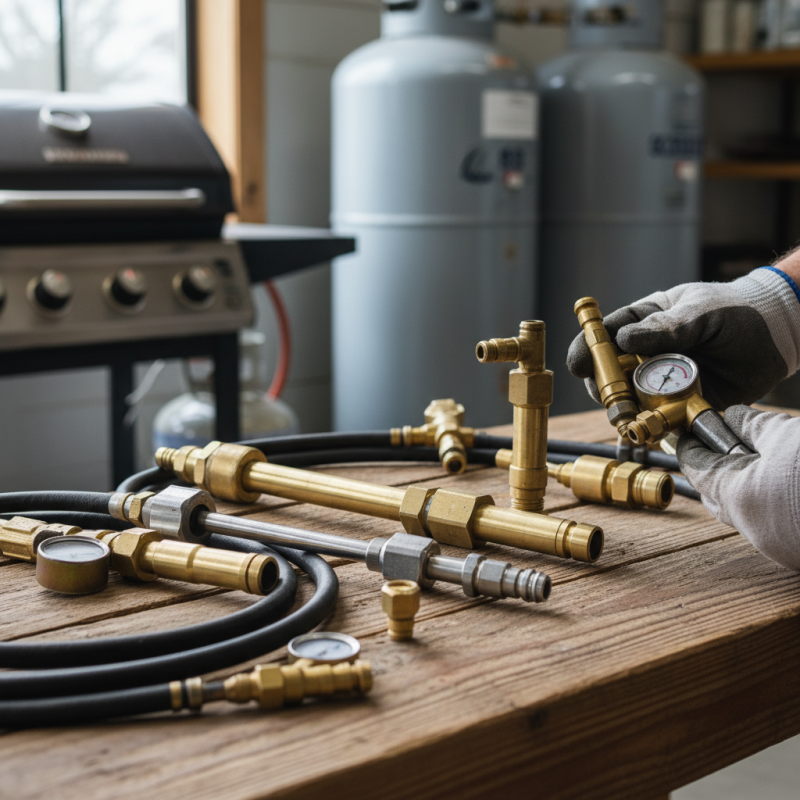
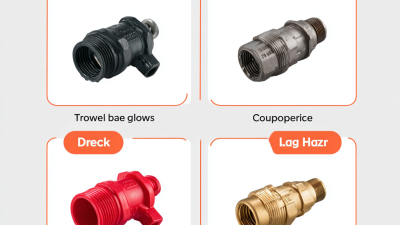
When choosing a propane nozzle, it’s essential to understand the different types available on the market. There are typically two main types: fixed and adjustable nozzles. Fixed nozzles are straightforward and easy to use. They dispense propane at a set rate, which can be sufficient for many household appliances. However, they may not offer flexibility for various tasks.
Adjustable nozzles, on the other hand, allow for control over the flow rate. This is beneficial for tasks that require precision, such as grilling or heating. However, they can be more complex. Users may need to adjust them frequently, leading to potential user error. Grasping the nuances of each type can enhance your experience.
It's also vital to consider materials and safety features. Look for nozzles made of durable materials that can withstand various conditions. Safety should never be compromised. Reviews from other users can provide insight but may not always reflect your unique needs. Understanding these differences enables you to make a more informed decision. Each type has its advantages and potential issues. Take the time to evaluate what will work best for your specific requirements.
Top Tips for Choosing the Right Propane Nozzle for Your Needs
| Nozzle Type |
Best For |
Pressure Range |
Fuel Type |
Typical Uses |
| Standard Nozzle |
General Use |
Low to Medium Pressure |
Propane |
Grills, Heaters |
| High-Pressure Nozzle |
Industrial |
High Pressure |
Propane |
Forklifts, Heavy Equipment |
| Barbecue Nozzle |
Outdoor Cooking |
Low Pressure |
Propane |
Barbecues, Outdoor Heaters |
| Regulated Nozzle |
Controlled Environments |
Medium Pressure |
Propane |
Propane Systems, Appliances |
| Custom Nozzle |
Specialized Applications |
Varies |
Propane |
Custom Equipment |
Identifying Your Specific Needs for Propane Usage
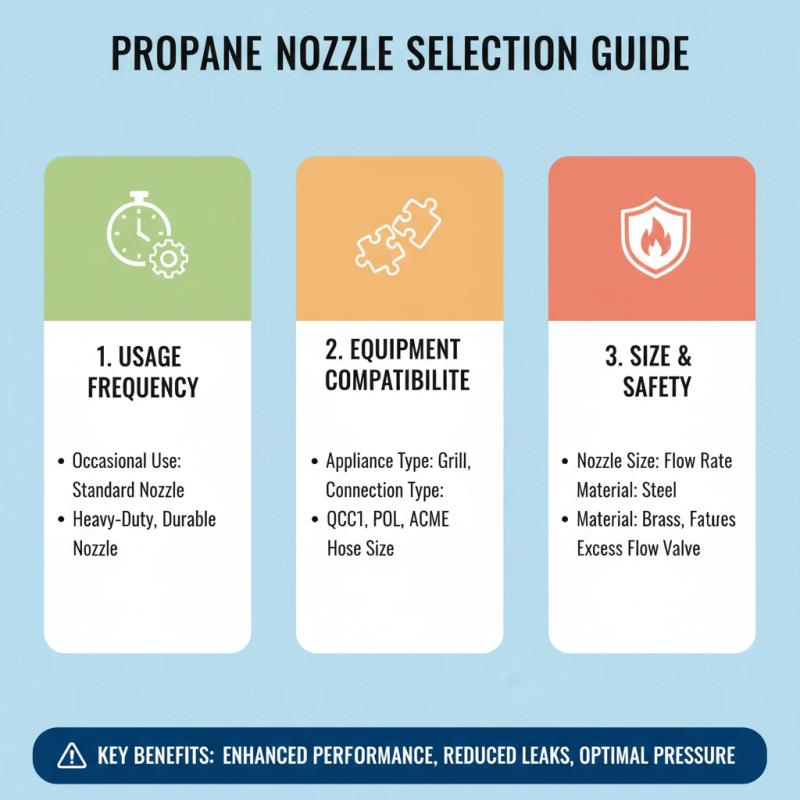
When choosing a propane nozzle, it's crucial to identify your specific needs. Consider factors like usage frequency and the equipment compatibility. Propane nozzles come in various sizes and styles, impacting efficiency and safety. A well-matched nozzle can enhance performance, while a wrong choice may lead to leaks or low pressure.
According to industry reports, over 70% of propane users underestimate the importance of selecting the right nozzle. Many assume that any nozzle will suffice, but this can be a costly mistake. For instance, a nozzle designed for high-pressure systems may not function correctly in low-pressure applications. Poor choice leads to inefficiencies. Inaccurate fittings can cause dangerous situations, including gas leaks.
Understanding your specific requirements can save you time and money. The right nozzle improves operational efficiency, potentially increasing your energy savings. Studies suggest that optimized nozzle selection can improve delivery efficiency by up to 15%. It's essential to reflect on your usage patterns. Take time to analyze the equipment and consult safety guidelines, even if it seems tedious.
Key Features to Consider When Selecting a Propane Nozzle
When selecting a propane nozzle, pay attention to its size. Nozzles come in various diameters. A nozzle that is too small may restrict flow. On the other hand, one that is too large can lead to inefficient operation. Ensure the size matches your equipment. Measurement is crucial for optimal performance.
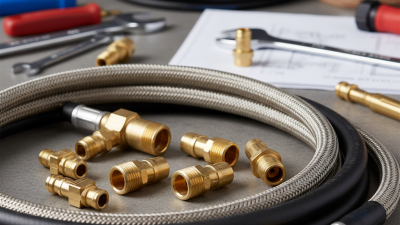
Next, consider the material. Common options include brass, stainless steel, and plastic. Each material has its benefits and drawbacks. For example, brass is durable but may corrode over time. Plastic is lightweight but may not withstand high temperatures. Weigh your needs against the characteristics of each material.
Compatibility is also key. Check if the nozzle fits your existing setup. Some nozzles may not work with specific devices. This could lead to leaks or inefficiencies. Research is necessary to avoid these issues. An informed choice often leads to better performance. Take your time to explore different options before making a decision.
Safety Considerations When Choosing a Propane Nozzle
When selecting a propane nozzle, safety should be your top priority. A poorly designed nozzle can lead to dangerous leaks or accidents. Make sure the nozzle you choose fits securely on the propane tank. Check for a proper seal. A loose nozzle can lead to harmful gas escaping. Leaks not only pose health risks but can also create fire hazards.
Consider the material of the nozzle. Some materials resist corrosion better than others. This is crucial for long-term use. Inspect the nozzle frequently for wear or damage. Cracks or signs of wear can indicate it's time for a replacement. Always know how to operate the nozzle and follow safety instructions. Improper use can lead to unexpected issues.
In addition to safety features, think about ease of use. Some nozzles are easier to connect or disconnect. Choosing a user-friendly design can help reduce the chance of accidents. Always wear protective gear when working with propane. Even a small mistake can lead to big problems. Having a clear plan in case of emergencies is essential.
Maintenance and Care Tips for Prolonging Nozzle Lifespan
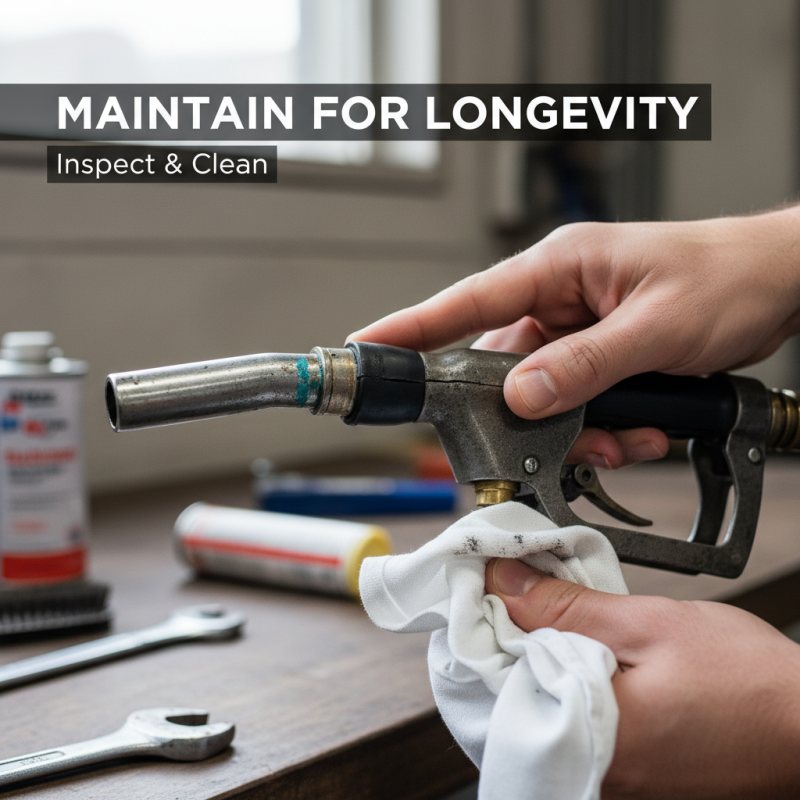
Maintaining your propane nozzle is essential for its longevity. Regular inspection can help detect issues early. Look for signs of wear, like cracks or corrosion. Clean the nozzle after each use. A simple wipe can prevent buildup, ensuring optimal performance.
Storing the nozzle properly can also extend its life. Keep it in a dry place, away from moisture. A damp environment can lead to rust and damage. Avoid leaving the nozzle attached to the propane tank when not in use. This habit can cause leaks, leading to safety hazards.
Sometimes, despite our best efforts, nozzles fail. This can frustrate users. Regular maintenance may not always prevent problems. If your nozzle is not functioning, consider replacing it rather than risking damage. Keep spare nozzles handy for emergencies. This can reduce downtime and enhance safety during usage.