Essential Tips for Choosing Propane Gas Hose and Fittings?
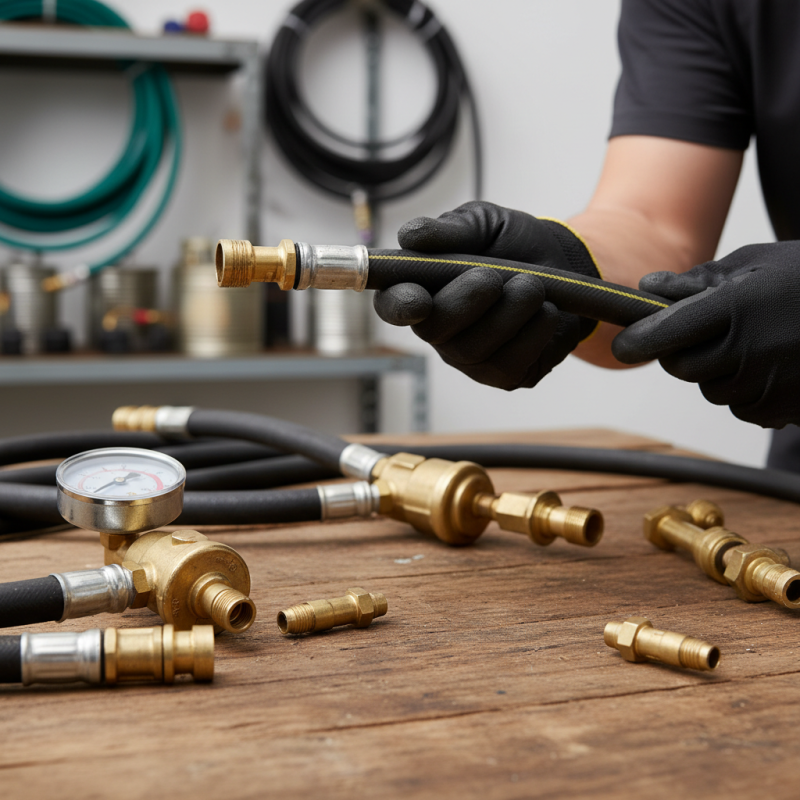
Choosing the right propane gas hose and fittings is crucial for safety and efficiency. According to John Smith, a seasoned expert in the propane industry, “Quality components can prevent hazardous leaks and ensure smooth operation.” This highlights the importance of selecting reliable materials.
When selecting propane gas hose and fittings, consider your specific needs. Different applications require different specifications. You may need to evaluate factors like pressure ratings and temperature resistance. However, many overlook compatibility and standards during their selection process. This oversight can lead to serious complications.
Lastly, never compromise on safety. Inspect hoses regularly for wear and tear. Remember, even a small leak can lead to significant risks. Staying informed and vigilant about your propane gas hose and fittings is essential.
Understanding the Importance of Propane Gas Hoses and Fittings
Propane gas hoses and fittings play a critical role in safety and efficiency. The U.S. Department of Energy reports that improper equipment can lead to leaks and hazardous situations. Therefore, understanding these components is essential for both users and professionals.
When selecting hoses, consider factors like material and temperature tolerance. For instance, many hoses are made of rubber or thermoplastic, each with different advantages. The National Fire Protection Association emphasizes that outdoor hoses should withstand UV rays and temperature fluctuations. Short lengths often reduce pressure loss, which benefits performance.
Moreover, fittings must match the specific requirements of your propane application. Using incompatible fittings can cause leaks, which are extremely dangerous. According to the Propane Education & Research Council, proper fittings need to be durable and resistant to corrosion. Over time, wear and tear may occur, which is a common oversight. Regular inspections can prevent unexpected failures, ensuring safe operation.
Identifying the Right Size and Length for Your Propane Hose
When choosing a propane gas hose, size and length are crucial. A hose that is too short can limit your mobility. On the other hand, a hose that's excessively long might lead to pressure drops. The correct size ensures efficient gas flow.
Consider the diameter of the hose. Common diameters are 1/4 inch and 3/8 inch. A narrower diameter can restrict gas supply. Too wide can lead to inefficient performance. Measure twice before purchasing.
For length, assess your setup. Walk around your workspace. Identify where the propane source is, and how far you need to go. If you’re unsure, opt for slightly longer hoses. It’s better to have a bit extra than to find yourself stranded. Always check manufacturer recommendations. They can guide you on the ideal specifications.
Material Considerations for Propane Gas Hoses and Fittings
When choosing propane gas hoses and fittings, material is a key factor. Various materials offer different durability, flexibility, and compatibility with gas. Rubber hoses are popular due to their flexibility and resistance to wear. However, they may degrade faster under UV light. PVC is lightweight but lacks flexibility in cold weather. Stainless steel offers excellent durability but can be heavy and less flexible.
Here are some tips. Always check for compatibility with propane. Consider the environment where the hose will be used. If it will be exposed to sunlight, UV-resistant materials are essential. Additionally, think about temperature extremes. Materials that perform well in one environment may fail in another.
It's also wise to inspect fittings and hoses regularly. Look for signs of wear or leaks. Be aware of any unusual smells or visual cues that indicate problems. Even the best materials need careful maintenance. Ignoring minor issues can lead to serious consequences. Choosing the right material for your propane setup is crucial for safety and efficiency. Take your time and make informed decisions.
Safety Standards and Regulations for Propane Equipment
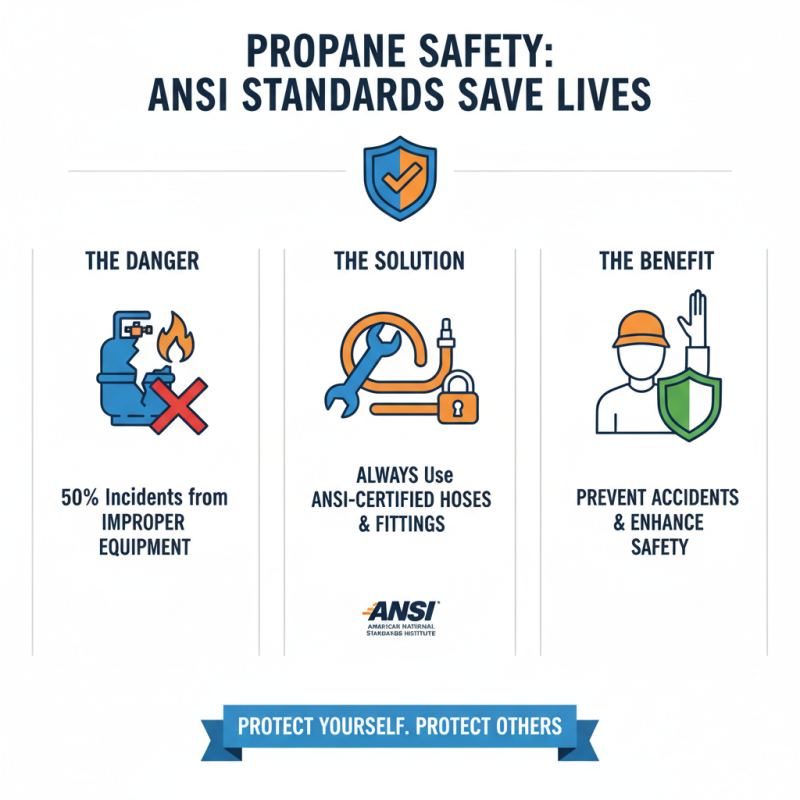
When dealing with propane equipment, safety standards are vital. The American National Standards Institute (ANSI) provides guidelines for propane hoses and fittings. Following these standards can prevent accidents and enhance safety. In fact, over 50% of propane-related incidents stem from improper equipment. This highlights the importance of using certified products.
When selecting hoses, consider their pressure rating. Choose hoses that meet or exceed the requirements for your application. Check for compliant fittings as well. Many fittings do not meet safety regulations, which could lead to dangerous leaks. Always ensure your equipment is listed by a recognized authority.
Remember to regularly inspect hoses and fittings. Look for signs of wear, such as cracks or fraying. These indicators often go unnoticed until it’s too late. Proper maintenance can save lives. It’s recommended to replace hoses every 5 years, even if they appear intact. Staying proactive in your safety practices is essential.
Choosing Compatible Fittings for Optimal Performance and Safety
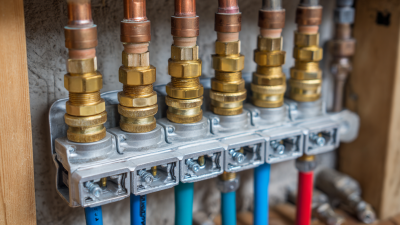
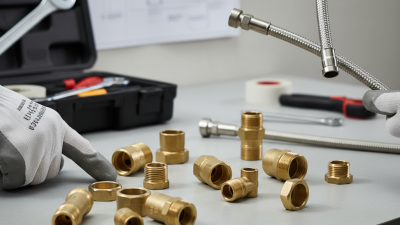
When selecting propane gas hose and fittings, compatibility is key. It ensures safety and performance. Various fittings exist, including threaded, quick connect, and compression types. Each type serves a unique purpose. Understanding these differences can save both time and resources.
Check the materials used in fittings. They should withstand high pressure and temperature. Brass and stainless steel are popular choices. However, some may corrode over time. Often overlooked, this can lead to leaks. Regular inspections are crucial to ensure reliability.
It’s also important to consider the size. Mismatched sizes can cause leaks. An improper fit may require a reducing fitting, which can compromise safety. While it may seem trivial, this step impacts functionality. Always measure your hose and fittings before purchase. Too often, people skip this. Accurate measurements can prevent dangerous situations.
Essential Tips for Choosing Propane Gas Hose and Fittings
| Feature |
Description |
Importance |
Recommended Standards |
| Material |
Choose hoses made from durable rubber or PVC for flexibility and resistance to environmental factors. |
High |
UL 21, CSA B149 |
| Diameter |
Select the correct diameter to ensure proper gas flow and efficiency. |
Critical |
Refer to equipment specifications |
| Fittings Compatibility |
Ensure fittings match the hose and connect securely to prevent leaks. |
Very High |
ANSI Z21.75 |
| Pressure Rating |
Select hoses rated for the maximum pressure of your application for safety. |
Critical |
Check manufacturer specifications |
| Temperature Resistance |
Ensure the hose can withstand the temperature range of your application. |
High |
Refer to manufacturer guidelines |