
Buying Galvanized Pipe can seem straightforward, especially when every supplier promises durability, corrosion resistance, and long service life. The reality is less tidy. Pipe quality depends on coating thickness, steel grade, dimensions, manufacturing standards, and the environment where the pipe will operate. A bright surface can still hide poor threading, uneven zinc coverage, or inaccurate wall thickness.
Frank Goodwin of the American Galvanizers Association explains, “Zinc protects steel through barrier and cathodic protection.” That principle matters when comparing pipes for water lines, fencing, scaffolding, irrigation, or structural projects. Galvanized Pipe is not automatically suitable for every application. Soil chemistry, standing water, temperature, and contact with other metals can influence its performance. Small details become expensive problems.
This guide presents seven practical tips for making a more confident purchase. It examines pipe specifications, coating quality, required standards, supplier documentation, connection methods, and total project cost. You will also see why checking the pipe’s inside surface matters, not only its exterior appearance. A heavy pipe is not always the better pipe. A cheaper quotation is not always a saving.
Measure twice.
Real purchasing decisions rarely follow perfect theory. Delivery delays happen. Product labels can confuse. Even experienced buyers occasionally overlook thread condition or end protection. That is why careful inspection remains valuable. Ask for test reports, confirm the intended use, and compare measurable specifications instead of relying on sales language. These habits cannot remove every risk, but they can prevent avoidable mistakes and help you select Galvanized Pipe with greater technical confidence.
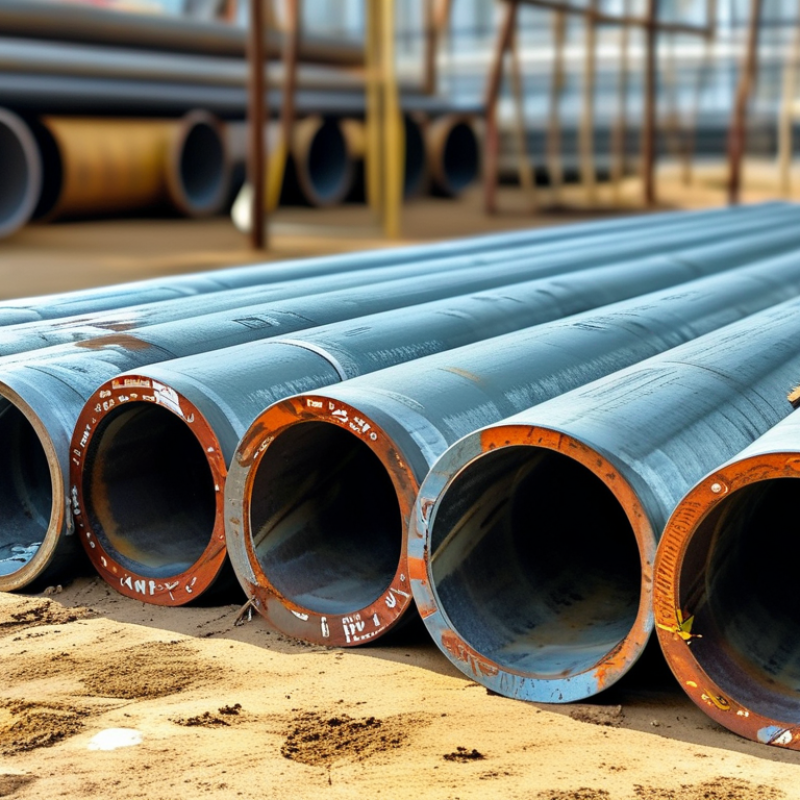
Galvanized pipe is carbon steel protected by a zinc coating, but its type matters. Hot-dip galvanized pipe usually has a thicker, more durable zinc layer. Electro-galvanized pipe has a thinner, smoother coating for lighter indoor service. Tip: Confirm the manufacturing method before comparing prices. Tip: Check the nominal size, wall thickness, length, and thread condition. A pipe can look strong and still be unsuitable.
Coating thickness affects service life, especially in humid or outdoor environments. Ask for coating measurements or compliance documents from a reliable supplier. Tip: Inspect cut ends, weld areas, and threaded sections carefully. These areas may have less protection. In my experience, small scratches become larger maintenance problems when water remains trapped. Tip: Avoid mixing incompatible fittings without checking corrosion risks. I still double-check this point. It is easy to overlook.
Applications should guide the purchase. Galvanized pipe commonly serves water distribution, fencing, greenhouse frames, handrails, agricultural structures, and compressed-air lines. Tip: Verify whether the pipe is approved for the intended water service. Tip: Consider temperature, pressure, soil contact, and exposure to chemicals. Tip: Choose fittings with compatible coatings. A shiny surface is not proof of quality. For buried use, add suitable corrosion protection and confirm local requirements. One judgment call remains difficult: a thicker coating is not always the best choice if the design, fittings, or installation method is wrong.
Buying galvanized pipe starts with a simple question: what must it carry, and under which conditions? Match the nominal pipe size to required flow, not just the connection diameter. A 1-inch pipe may have a different internal diameter across schedules. ASME B36.10M provides key dimensional references for steel pipe. Check outside diameter, wall thickness, and actual bore before ordering.
Schedule affects strength and usable flow. Schedule 40 is common for moderate service, while Schedule 80 provides a thicker wall and smaller internal passage. However, schedule alone does not establish a safe pressure limit. Temperature, threading, corrosion allowance, and fitting design also matter. Request pressure ratings and test documentation for the exact pipe and connection system. Do not rely on a supplier’s casual estimate.
The project environment deserves equal attention. Outdoor exposure, standing water, and dissimilar metals can accelerate corrosion at joints. The American Society of Civil Engineers’ 2024 Infrastructure Report Card noted that U.S. drinking-water systems face approximately 6,000 main breaks each day. That figure is not a direct galvanized-pipe failure rate, but it shows why service conditions deserve careful review. Measure the run, calculate demand, and compare the result with the pipe’s certified rating. A practical mistake is choosing a larger schedule without checking pump capacity or fitting compatibility. More steel is not always better.
A bright silver surface proves little about zinc coating quality. Check the specified coating thickness, zinc mass, and testing method instead. For hot-dip galvanized pipe, compare the product specification with applicable requirements in ASTM A53, ASTM A123, or ISO 1461. The correct standard depends on the pipe’s manufacturing process and intended use.
Ask for a mill certificate showing steel grade, coating measurements, and inspection results. Do not accept vague claims such as “heavy galvanized.”
Look closely at welds, threads, ends, and bends. These areas can receive less zinc or suffer damage during handling. A coating should appear reasonably continuous, without bare spots, heavy runs, peeling, or deep ash deposits. Small surface marks may be repairable, but repairs need an approved zinc-rich method. Measure samples when possible. Visual inspection is useful, not conclusive. Salt-spray results also need caution; they rarely predict exact outdoor service life.
Corrosion protection depends on exposure. Humid air, coastal salt, buried soil, and chemical contact require different decisions. Compare the coating class with the environment, not only the purchase price. Consider pipe wall thickness too. Zinc protects steel sacrificially, but severe scratches can still accelerate local corrosion. I once treated a thick-looking coating as automatically superior; the damaged threads proved otherwise. That assumption was weak. Confirm storage conditions, transport protection, and compatibility with fittings before buying. A lower-cost pipe can become expensive when field repairs multiply.
7 Essential Tips for Buying Galvanized Pipe
A material certificate should match the pipe in front of you. Check the steel grade, zinc coating thickness, dimensions, heat number, and test results. The document should identify the testing laboratory and provide traceability to the production batch. Ask for original records, not only a sales summary. If details conflict, pause the purchase. Small gaps can create costly disputes later.
Inspect the surface under clear light. The zinc layer should look continuous, without bare patches, peeling, deep scratches, or heavy deposits. White storage stains may look alarming, but they do not always mean serious failure. Still, moisture trapped between bundled pipes deserves attention. I once accepted a shipment after checking only the outer bundle. That was careless. Several inner pipes showed uneven coating and rough threaded ends. A quick sample check would have exposed the problem.
Product consistency matters as much as one attractive sample. Measure pipes from different bundles, not just the first piece. Compare outside diameter, wall thickness, length, straightness, weight, and thread quality. Check couplings for clean engagement and proper fit. Keep photographs and inspection notes with the purchase file. Independent inspection adds confidence, especially for large orders. Supplier quality records are useful, but they should support physical checks rather than replace them. Some buyers overlook this when delivery schedules become tight.
Check material certifications, surface condition, and product consistency before accepting a galvanized pipe order.
Request the heat number, steel grade, applicable product standard, and inspection results.
Make sure the quotation identifies the required standard, nominal size, schedule, and end type.
Look for continuous coverage without exposed steel, blisters, peeling, or heavy zinc lumps.
Use a calibrated coating-thickness gauge and compare results with the specified galvanized-coating requirement.
Measure outside diameter, wall thickness, length, straightness, and thread condition where applicable.
Sample multiple bundles and compare dimensions, coating appearance, markings, and certificates across the lot.
Ensure bundle tags remain readable and connect each shipment to its heat, lot, size, and inspection records.
The chart shows standardized nominal outside diameters for common pipe sizes referenced in ASME B36.10M. Actual supplied dimensions must be checked against the applicable standard and permitted tolerances.
7 Essential Tips for Buying Galvanized Pipe
Buying galvanized pipe starts with supplier evidence, not a polished catalog. Request mill certificates, coating-test records, and traceable heat numbers. ASTM A123/A123M defines coating requirements for fabricated steel products, but compliance alone does not prove careful handling. Ask how pipes are stored, bundled, and inspected before dispatch. The American Galvanizers Association reports service lives above 50 years in many rural settings. Coastal salt, abrasion, and trapped moisture can reduce performance. Context matters.
Compare total cost, not only the quoted price. Include cutting, threading, freight, unloading, storage, installation, repair, and replacement. The World Bank’s 2023 Logistics Performance Index evaluated 139 economies and emphasized delivery reliability and timeliness. Those factors can turn a low unit price into an expensive delay. Request a landed-cost worksheet covering taxes, minimum quantities, currency changes, and fuel surcharges. I have seen estimates fail here. The missing line was storage.
Delivery terms should state Incoterms, dispatch dates, packaging standards, damage reporting, and responsibility for shortages. Confirm whether partial shipments are acceptable. They may keep crews moving. Or create mismatched batches. Warranty support deserves equal scrutiny. Require written coverage for coating defects, dimensional errors, and premature corrosion, with inspection deadlines and remedy options. Ask whether claims require photographs, laboratory tests, or independent inspection. Standards define quality, but warranty language controls the practical response. A supplier’s response speed before payment can reveal future support. Test it.
| Tip | Evaluation Dimension | What to Verify | Practical Benchmark or Cost Consideration | Recommended Purchasing Action |
|---|---|---|---|---|
| 1 | Confirm the Required Standard | Check the pipe standard, outside diameter, wall thickness, length, end finish, zinc-coating requirement, and intended application. Common standards may include ASTM, EN, ISO, or equivalent national specifications. | A specification should identify measurable requirements such as nominal pipe size, schedule or wall thickness, coating mass or thickness, dimensional tolerance, and test documentation. | Request a written specification Do not compare quotations until every supplier is pricing the same technical requirements. |
| 2 | Evaluate Supplier Quality Controls | Review production capability, material traceability, inspection procedures, coating-process controls, nonconformance handling, and the availability of mill or batch certificates. | A reliable quality package commonly includes a certificate of conformity, dimensional inspection results, coating inspection records, and heat or batch traceability where applicable. | Use a document checklist Ask for sample inspection records and clarify whether third-party inspection is available before shipment. |
| 3 | Compare Total Delivered Cost | Include pipe price, cutting or threading, protective packaging, inland transport, export handling, freight, insurance, duties, taxes, unloading, inspection, and possible storage charges. | The lowest unit price may not be the lowest delivered cost. A useful comparison is: total landed cost divided by the accepted quantity delivered to the project site. | Build a landed-cost worksheet Separate one-time charges from per-ton, per-piece, or per-shipment costs. |
| 4 | Assess Corrosion Protection | Verify the galvanizing method, coating uniformity, coating thickness or mass, surface condition, repair procedure for damaged areas, and compatibility with the service environment. | Corrosion performance depends on coating thickness, environment, handling, drainage, and maintenance. Threads, cut ends, weld areas, and contact points often require special attention. | Match coating to exposure Request coating-test results and define acceptable repair methods in the purchase order. |
| 5 | Review Delivery Terms and Packaging | Confirm production lead time, estimated dispatch date, shipping terms, delivery location, partial-shipment policy, packaging method, bundle markings, and procedures for delays or transit damage. | Delivery schedules should distinguish manufacturing time, inspection time, export clearance, transit time, and buffer time. Bundled pipe should be protected from impact, moisture retention, and load movement. | Set milestone dates Include packaging, marking, delivery acceptance, and delay-notification requirements in the contract. |
| 6 | Check Quantity, Tolerances, and Acceptance Rules | Define ordered quantity, allowable quantity variance, piece-length tolerance, straightness, ovality, end condition, visual defects, and the inspection method used for acceptance. | Quantity should be controlled by a clearly stated unit, such as pieces, metres, or metric tonnes. Weight-based billing should explain theoretical versus actual weight and the applicable tolerances. | Agree on acceptance criteria Establish how shortages, excess quantities, rejected pieces, and replacement costs will be handled. |
| 7 | Clarify Warranty and After-Sales Support | Confirm warranty duration, coverage for manufacturing defects and coating failures, exclusions for incorrect storage or installation, claim evidence, response time, and replacement or credit procedures. | Warranty value depends on clear coverage and enforceable remedies. The contract should state the claim period, required inspection evidence, corrective-action deadline, and responsibility for return or replacement freight. | Put support terms in writing Retain invoices, photographs, inspection reports, batch records, and delivery documents for potential claims. |
