
How to Choose the Best Tubular Lanyard in 2026?

Choosing the right Tubular Lanyard in 2026 requires more than comparing colors, prices, or advertised strength. The best option depends on its intended use, user weight, connection points, and working environment. A lanyard used for industrial positioning may need different features from one used during rescue training or outdoor activities. Small details matter.

Reliable selection begins with verified manufacturer information. Check the webbing material, width, length, rated capacity, stitching quality, and connector compatibility. Look for clear inspection guidance and traceable product identification. Independent testing or recognized certification can add confidence, but certificates should match the exact model. General marketing language is not enough. It can be misleading.

Physical inspection also deserves attention. Run your fingers along the tubular webbing and look for cuts, glazing, pulled stitches, chemical stains, or unusual stiffness. Examine every buckle and connector for cracks, deformation, corrosion, or incomplete locking. Follow the manufacturer’s instructions and applicable workplace requirements. Never guess about damaged equipment. Replace it when its history is uncertain.

This guide compares practical features that influence safety, comfort, durability, and value in 2026. It considers daily handling, storage, cleaning, inspection frequency, and changing user needs. The perfect choice rarely exists. A highly durable model may feel bulky, while a lightweight design may offer less abrasion resistance. Personal preference matters, but it cannot override technical limits. Careful decisions come from evidence, honest inspection, and a clear understanding of the task.
How to Choose the Best Tubular Lanyard in 2026?

What Is a Tubular Lanyard and How Does It Work?

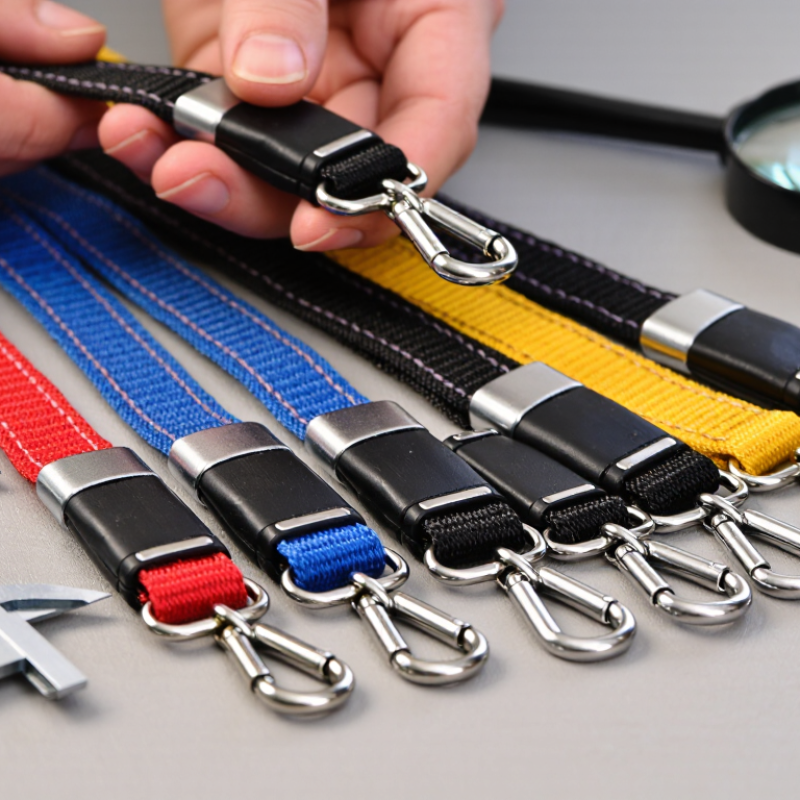
A tubular lanyard uses flat, hollow-woven webbing instead of a solid rope. Its rounded structure improves flexibility and reduces sharp pressure points. The webbing usually contains high-strength synthetic fibers, while stitched loops connect clips, hooks, or adjustment devices. When tension is applied, the woven tube spreads the load across several fibers. This design helps the lanyard bend smoothly around a harness attachment or tool handle.

In practical use, one end connects to an approved anchor point, and the other secures equipment or supports controlled movement. Some models include energy-absorbing sections for fall protection, while others only prevent tools from dropping. These functions are not interchangeable. Check the label, rated capacity, connector type, and intended application before choosing one. A lanyard designed for a small hand tool may fail under a person’s weight.

When comparing options in 2026, examine stitching closely. Tight, even seams matter more than a soft appearance. Run your fingers over the webbing and look for cuts, melted fibers, loose threads, or faded areas. I once focused too much on connector strength and overlooked abrasion near the loop. That was a useful reminder. The best tubular lanyard should match the load, environment, length, and user’s training. It should not be chosen by appearance alone. Replace it after serious impact, chemical exposure, or uncertain damage, even when the surface still looks acceptable.

Which Materials and Construction Features Matter Most?

Material choice starts with the work environment, not color or advertised breaking strength. For tubular fall-arrest lanyards, nylon provides good flexibility and energy absorption. Polyester usually handles moisture, ultraviolet exposure, and dimensional change better. In wet outdoor work, that difference matters. In cold conditions, flexibility also deserves attention.

Construction details often reveal more than the label. Look for tightly woven tubing, reinforced eyes, protected stitching, and a visible energy absorber. Bartacks should appear even, dense, and free from loose threads. The connector area needs smooth edges. Rough hardware can cut or abrade webbing during repeated movement. ANSI/ISEA Z359.13 and EN 355 provide useful performance benchmarks, but compliance marking does not replace inspection.

The U.S. Bureau of Labor Statistics recorded 885 fatal workplace injuries involving falls, slips, and trips in 2023. OSHA also reported 395 fatal construction falls in 2022. These figures make inspection discipline practical, not theoretical. Check for glazing, pulled stitches, chemical stains, distorted connectors, and a deployed absorber. Retire questionable equipment. No material works everywhere. I once favored nylon for its comfortable handling, but that preference needs reconsideration around persistent moisture and sunlight. Product selection should match exposure records, rescue planning, and the manufacturer’s stated service limits. A cheaper lanyard may look identical until abrasion begins inside the tube.

How to Match Lanyard Design to Your Intended Use

How to Choose the Best Tubular Lanyard in 2026?

How to Match Lanyard Design to Your Intended Use

A tubular lanyard should match the job, not merely the color. For conferences, choose a soft, lightweight design with a comfortable width. For tools, inspect stitching, connector strength, and the attachment point. A narrow strap may feel neat but can twist under repeated use. For outdoor equipment, select abrasion-resistant webbing and hardware that suits moisture and dirt. Never treat a decorative lanyard as fall-protection equipment.

Tips: Write down the real use first. Check the expected load, movement, length, and environment. Then compare the lanyard’s materials and connectors. A quick hand test helps. Look for frayed edges, loose stitching, or a clasp that opens too easily. Replace damaged gear promptly.

In practical testing, I have found that length changes comfort more than expected. A badge lanyard hanging too low can catch on desks or door handles. A tool lanyard that is too short can restrict movement. Tubular construction often distributes pressure better than flat, thin webbing, but padding and width still matter. My early mistake was choosing by appearance before checking attachment compatibility. That decision looked fine on a screen, yet felt awkward during daily use. The best design may not be the most attractive one.

How to Evaluate Strength, Safety, Comfort, and Durability

How to Choose the Best Tubular Lanyard in 2026?

Strength should be judged as a complete system, not by webbing numbers alone. Check the lanyard’s rated use, connectors, stitching, energy absorber, and user weight range. OSHA’s 2023 Fall Protection Systems criteria limit maximum arresting force to 1,800 pounds and free fall to six feet. The same rule limits deceleration distance to 42 inches. These figures make compatibility critical. A strong strap can still fail as part of a poorly matched setup. Look for clear labels, traceable test information, and compliance with the current ANSI/ASSP Z359.13 requirements.

Safety also depends on inspection habits. Examine every inch before use. Watch for pulled stitches, glazing, cuts, chemical stains, and stiff sections. A small fuzzy area may be harmless, or it may hide serious abrasion. That uncertainty deserves attention. The U.S. Bureau of Labor Statistics recorded 885 fatal occupational injuries involving falls, slips, and trips in 2023. A lanyard should therefore offer reliable energy absorption, secure gates, and connectors that cannot roll out under normal loading. Never judge protection by appearance alone.

Comfort affects real-world use. A wide, flexible tubular design can reduce pressure across the shoulder or waist. It should not twist beneath a harness or press against the neck. Durability requires resistance to repeated bending, sunlight, moisture, and jobsite abrasion. I still catch myself checking the webbing first and the hardware second. That order is not ideal. Clean records, scheduled inspections, and removal after a fall provide stronger protection than confidence alone.

How to Choose the Best Tubular Lanyard in 2026? — How to Evaluate Strength, Safety, Comfort, and Durability
Evaluation Dimension Key Data to Check Recommended Benchmark or Requirement How to Verify It Importance
Primary Material Webbing fiber used in the tubular construction Polyester generally offers lower moisture absorption and better dimensional stability than nylon. Nylon can provide good flexibility and abrasion performance but absorbs more moisture. Confirm the fiber type and technical data sheet. Do not infer material from color or appearance. High
Webbing Width Finished tubular webbing width Common fall-protection webbing widths are approximately 25–50 mm. Width alone does not prove strength, comfort, or compliance. Measure the finished webbing with a calibrated ruler and compare it with the manufacturer’s specification. Medium
Minimum Breaking Strength Rated tensile strength of the complete lanyard assembly For products designed to applicable fall-protection requirements, a commonly referenced minimum strength level is 22.2 kN (5,000 lbf). The complete assembly, including stitching and connectors, must be considered. Request a current third-party or laboratory test report covering the complete finished assembly, not only the raw webbing. Critical
Energy Absorption Peak arrest force and absorber deployment Energy-absorbing lanyards should be tested to the applicable standard. EN 355 limits maximum arrest force to 6 kN; ANSI/ASSP Z359.13 uses a maximum arrest-force limit of 8 kN (1,800 lbf). Check the product marking, test report, absorber type, user mass range, and maximum deployment length. Critical
Fall-Clearance Requirement Available distance below the worker Required clearance must account for lanyard length, absorber deployment, harness and body movement, worker height, and a safety margin. A longer lanyard does not automatically provide adequate protection. Use the manufacturer’s clearance calculation. Never estimate clearance from lanyard length alone. Critical
Connector Compatibility Hook or carabiner gate, locking system, and attachment geometry Connectors must be compatible with the harness, anchorage, and intended attachment point. Avoid side loading, gate loading, incompatible shapes, and connection to unsuitable openings. Check connector instructions, gate opening, locking action, orientation, and compatibility warnings. Critical
Stitching Quality Load-bearing stitch pattern, thread consistency, and protective covers Stitching should be uniform, fully secured, free from loose ends, and protected where abrasion or contamination is likely. Stitch appearance alone cannot establish rated strength. Inspect both sides of every load-bearing seam and request destructive-test or production-quality records where required. Critical
Abrasion Resistance Resistance to rubbing against edges, structures, and hardware Choose reinforced or abrasion-resistant construction when repeated contact is expected. Standard fall lanyards are not automatically suitable for sharp-edge applications. Review abrasion-test results and confirm whether the product is specifically approved for leading-edge or sharp-edge use. High
Cut and Heat Exposure Contact with sharp edges, welding sparks, flame, hot surfaces, or chemicals Tubular webbing can be damaged by cutting, melting, burning, or chemical attack. Use only products with explicit approval for the relevant hazard. Review the chemical-resistance and temperature limitations. Remove any lanyard with melted, glazed, fused, or cut fibers. Critical
Moisture and UV Durability Performance after wetting, drying, sunlight exposure, and storage Polyester generally absorbs less water than nylon, but both materials require inspection after UV exposure, contamination, and repeated wet-dry cycles. Check the care instructions, UV-aging data, storage requirements, and visible condition of the webbing. High
Comfort and Flexibility Webbing hand, edge feel, weight, flexibility, and interference with movement A softer, flexible tubular structure may improve handling and reduce pressure points, but comfort must not be traded for certified strength or energy-control performance. Evaluate the lanyard while wearing the intended harness and work clothing. Check for twisting, snagging, and restricted movement. Medium
Length and Configuration Fixed length, adjustable length, single-leg, or twin-leg design Select the shortest configuration that supports the task while maintaining required clearance and reach. Twin-leg systems require correct 100% tie-off practices and compatible attachment points. Confirm the marked length, adjustment range, connector arrangement, and manufacturer’s use instructions. High
Inspection Indicators Labels, inspection tags, wear indicators, and traceability The lanyard should have legible identification, applicable standard information, manufacturing or traceability details, and clear inspection criteria. Reject products with missing labels, unreadable instructions, exposed core fibers, damaged stitching, or questionable history. Critical
Post-Fall Requirement Condition after a fall or high-load event An energy-absorbing lanyard that has arrested a fall must be removed from service immediately, even if damage is not obvious. Record the event, quarantine the product, and follow the manufacturer’s replacement and disposal procedure. Critical
Inspection Frequency Pre-use inspection and periodic competent-person inspection Perform a user inspection before each use. Periodic inspection intervals must follow local regulations, the applicable standard, the manufacturer’s instructions, and site risk assessment. Document inspections and remove equipment showing cuts, fraying, chemical damage, heat damage, deformation, corrosion, or malfunction. Critical
Overall Selection Score Weighted assessment for purchasing decisions Strength and fall protection: 35%; connector compatibility: 20%; clearance and configuration: 15%; durability: 15%; comfort and handling: 10%; documentation and traceability: 5%. Purchase only when all critical safety requirements pass, even if the total score is high. Critical
Selection rule: A tubular lanyard should be chosen only after confirming the applicable regional standard, complete-assembly test evidence, compatible anchorage and harness, required fall clearance, and the manufacturer’s inspection and retirement instructions. The benchmark values above are purchasing references, not a substitute for product certification or a site-specific risk assessment.

How to Compare Tubular Lanyards and Make the Final Choice

How to Choose the Best Tubular Lanyard in 2026?

When comparing Tubular Lanyards, start with the job, not the color or price. Measure the working distance, anchor position, and required reach. A six-foot model may feel convenient, yet it can create too much slack near an edge. Check the webbing width, stitching pattern, connector type, and rated capacity. The label should remain clear and readable.

Flexibility matters on ladders and narrow platforms. A softer tubular design usually bends more easily around equipment. A stiffer lanyard may resist twisting during repeated movement. Compare energy absorption, adjustment range, and connector locking action. Hold the connector in your hand. Does the gate move smoothly? Does the sleeve lock without force?

Inspect every sample under bright light. Look for cuts, melted fibers, pulled stitches, chemical stains, or damaged hardware. Never rely on appearance alone. Review the manufacturer’s instructions and use the lanyard only within its rated system. A trained, competent person should confirm compatibility and clearance before use. I have found that longer is not always better. It can improve reach but increase swing and fall distance. My earlier preference for maximum adjustability also proved imperfect; extra hardware added weight and snag points. The final choice should balance movement, clearance, inspection results, and user training. Write those comparisons down before purchase.

How to Choose the Best Tubular Lanyard in 2026?

How to Compare Tubular Lanyards and Make the Final Choice

Compare the lanyard’s certified strength with the maximum arrest-force limit required by the applicable standard. A suitable tubular lanyard should meet or exceed the 22.2 kN minimum strength benchmark and remain within the applicable arrest-force limit. Always confirm connector compatibility, user weight range, fall-clearance requirements, inspection status, and certification before making the final choice.

Reference benchmarks: EN 354 and EN 355 use a 22 kN strength requirement and a 6 kN maximum arrest force; OSHA fall-arrest criteria use 5,000 lbf (approximately 22.2 kN) component strength and 1,800 lbf (approximately 8 kN) maximum arresting force.