How to Choose the Best Peptide Synthesizer for Your Needs?
Selecting the right Peptide Synthesizer can be a daunting task. With the growing interest in peptide-based therapies and research, the demand for peptide synthesizers has increased. These machines allow researchers to produce a variety of peptides efficiently. However, knowing which one fits your needs requires careful consideration.
Different peptide synthesizers offer unique features and capabilities. Some are designed for small-scale experiments, while others can handle large quantities for commercial purposes. Understanding your specific requirements is crucial. It’s essential to assess the synthesizer's specifications, such as accuracy and speed, to find the best match.
Additionally, the complexity of peptide synthesis should not be overlooked. While many systems are user-friendly, others may require advanced training. Seeking expert opinions can provide valuable insights. Consider user reviews and professional recommendations to gauge their reliability. Investing time in research can lead to a choice that enhances your work's efficiency and effectiveness. A well-informed decision will ultimately support your research endeavors more successfully.
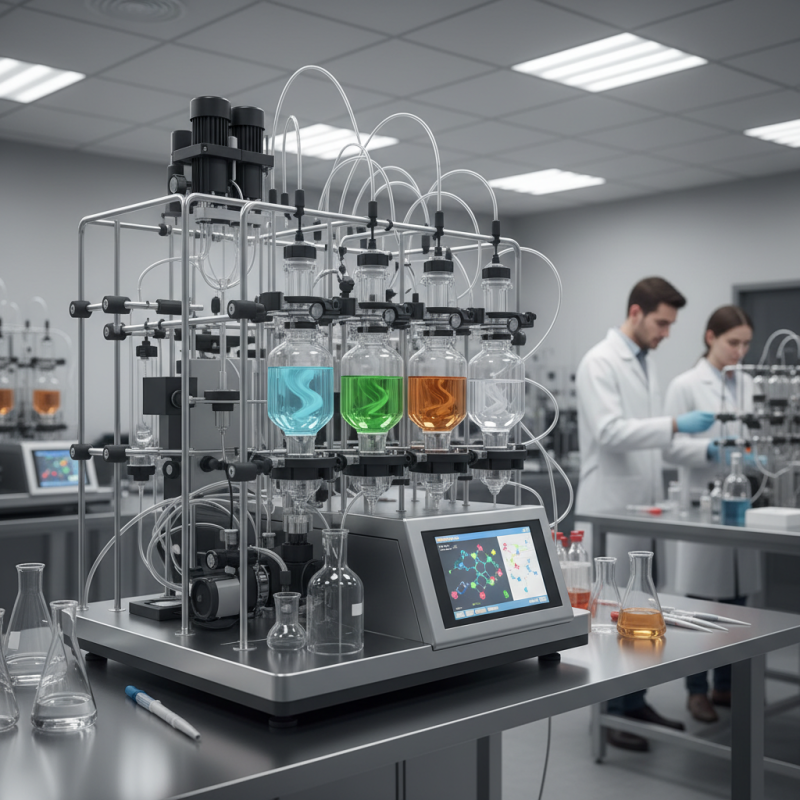
Understanding Peptide Synthesizers: Key Concepts and Terminology
When selecting a peptide synthesizer, understanding key concepts is essential. Peptide synthesis involves several technical terms. For instance, the term "coupling efficiency" refers to how successfully amino acids join during synthesis. High coupling efficiency leads to better product yield.
Tips: Familiarize yourself with the equipment involved. Knowing the distinction between manual and automated systems can enhance your decision-making. Some may prefer hands-on methods, while others may select automation for efficiency.
Another critical concept is "purity". High-purity peptides are essential for research and therapeutics. Impurities can affect biological activity and lead to erroneous results. Assessing purification methods is crucial.
Tips: Always consider your specific applications. For basic research, slightly lower purity might suffice. In contrast, clinical applications require the highest standards. Reflect on what level of purity aligns with your goals.
In the world of peptide synthesis, understanding these terms can greatly influence your success. However, the journey may include trial and error. Embracing imperfections can lead to valuable insights.
Identifying Your Research Needs: The Role of Peptide Synthesis
When considering the right peptide synthesizer, understanding your research needs is essential. Peptide synthesis plays a crucial role in various scientific fields. This includes drug development, vaccine creation, and biochemical studies. A clear grasp of your project’s requirements will help you select the most suitable equipment and techniques.
Different applications demand different synthesis scales and methods. For instance, a small-scale project may require minimal synthesis time, while a larger-scale endeavor might prioritize yield efficiency. Whether you're focusing on combinatorial libraries or specific modifications, it's vital to define the scope of your work clearly. Not every synthesizer can accommodate unique modifications or extensive sequences.
Engaging with peers and experts can provide valuable insight into choosing the right synthesizer. Consider factors like user support and maintenance needs. A more complex machine may offer advanced features, but if technical support is lacking, it could lead to frustration. Balancing complexity and usability will guide you in making an informed decision that aligns with your research goals.
Comparing Types of Peptide Synthesizers: Manual vs. Automated Options
When choosing a peptide synthesizer, you typically face two main options: manual and automated systems. Manual synthesizers offer greater control, allowing users to customize each step carefully. This approach suits experienced researchers who value precision. However, it can be time-consuming. Mistakes may arise from the hands-on nature, which demands a deep understanding of the synthesis process.
On the other hand, automated peptide synthesizers streamline the process. For busy labs, automation saves time and minimizes errors. These machines can perform repetitive tasks efficiently. While automation increases throughput, it may sacrifice some level of customization. Users must still be aware of potential limitations in flexibility.
Considering these options, assess your specific needs. A manual system might be ideal for specialized projects. Conversely, automated systems could enhance productivity in high-demand environments. Evaluating efficiency and expertise will help in making the best choice. Balancing detail with speed often reveals the best path forward.
Evaluating Features and Specifications: What to Look For
When selecting a peptide synthesizer, understanding key features is crucial. The synthesizer's capacity can significantly affect your research outcomes. Models with a larger scale can produce more peptides. However, a balance between scale and precision is essential. Research indicates that nearly 30% of errors in peptide synthesis result from inadequate equipment controls.
Look for synthesizers with robust software capabilities. Features like real-time monitoring and automated error detection enhance reliability. Studies show that systems with user-friendly interfaces improve efficiency by up to 25%. Additionally, consider the range of peptide lengths they support. Some synthesizers limit the synthesis of longer peptides, which can hinder experimental progress.
Another important aspect is the type of resin used. Different resins yield varying results, and some may not be compatible with all peptide sequences. Thus, it's advisable to review compatibility reports. It’s also essential to evaluate maintenance requirements. Systems that require frequent servicing can lead to significant downtime, affecting research timelines. Always weigh these factors against your specific needs.
Peptide Synthesizer Features Comparison
Budget Considerations: Finding the Best Value for Your Investment
Budget considerations play a crucial role in selecting the best peptide synthesizer. Investing wisely can save money and enhance research quality. A recent industry report highlighted that up to 30% of research budgets are often allocated to equipment. This makes understanding your needs essential.
When evaluating options, think about your specific requirements. Entry-level systems may cost around $10,000, while advanced models can exceed $100,000. A detailed analysis of your anticipated usage can uncover potential savings. Many researchers overlook maintenance costs, which can range from $1,000 to $5,000 annually. This expense can significantly impact long-term budgets.
Additionally, the capabilities of the synthesizer should match your research goals. Pay attention to sequencing capacity and user interface. Some models may offer advanced features at a premium price, which might not be necessary. Consider what you truly need to avoid overspending. It's essential to balance performance with value, ensuring that your investment aligns well with your research objectives.