
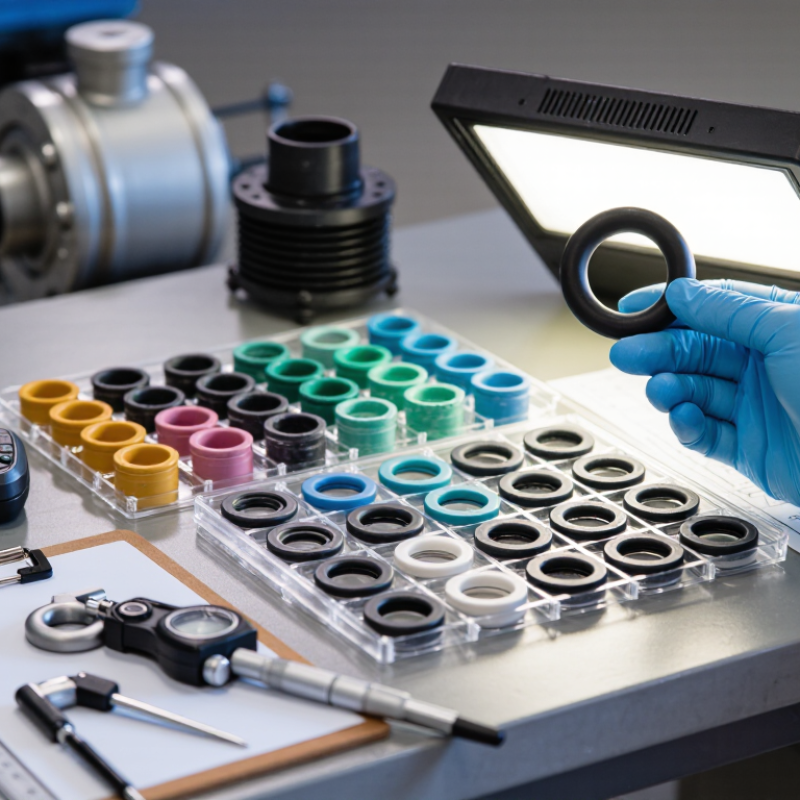
Before choosing a custom O-ring kit manufacturer, define the job each seal must perform. Record the groove dimensions, cord diameter, inside diameter, and required tolerances. A drawing or clear measurement photo can prevent expensive assumptions.
Specify the operating temperature, pressure, motion, and contact media. Hydraulic fluid, cleaning chemicals, outdoor moisture, and dry air can require different elastomers. Ask a qualified engineer to review compatibility data, especially when conditions change during operation.
Hardness matters too. A seal that feels suitable may still deform under pressure. I once saw a kit fail because the material was chosen correctly, but the compression range was ignored.
Clarify quantities, sample needs, packaging, labeling, and delivery expectations. Small batches may need flexible production, while service teams often need organized compartments and clear part identification.
Request material certificates, inspection records, dimensional reports, and lot traceability. These documents reveal whether a manufacturer controls quality or only promises it.
Define acceptance criteria before ordering. Include permitted flash, surface defects, color variation, and replacement procedures.
It is easy to overlook storage life. That mistake becomes costly later. Ask how the kit will be stored and protected from heat, sunlight, ozone, and contamination.
A manufacturer should question unclear requirements instead of accepting every detail without review. Even experienced buyers miss something.
Recheck the specification with maintenance staff who will use the kit in the field.