
Choosing the best LED Torch supplier in China requires more than comparing factory prices. Global buyers need verified brightness, battery safety, thermal control, and consistent production quality. The market is growing, but product definitions vary. Grand View Research reports continued expansion in the global flashlight market, driven by LED efficiency, outdoor recreation, emergency preparedness, and professional use. Its findings also show that rechargeable models are gaining attention as buyers seek lower operating costs and reduced battery waste.
“ For every tenfold increase in cumulative LED volume, the cost per lumen falls by a factor of ten, while performance improves twentyfold,” stated Dr. Roland Haitz, a leading LED researcher. His observation explains why modern LED Torch products can deliver stronger beams from smaller housings. It does not guarantee quality, though. Design still matters.
A reliable Chinese supplier should provide test records, production samples, battery specifications, IP ratings, and clear inspection procedures. Reports from the U.S. Department of Energy on solid-state lighting also emphasize efficiency, thermal management, and long-term performance as key evaluation factors. These details become practical at the factory floor: a flashlight body should remain comfortable after extended use, its switch should resist dust, and its beam should stay stable when the battery voltage drops.
Some suppliers advertise extreme lumen figures. Treat them carefully. Claimed output may differ from measured output. An experienced sourcing process compares laboratory data, field testing, certifications, and customer feedback. The strongest supplier is not always the cheapest. It is the partner that documents performance, admits limitations, and improves after honest review.
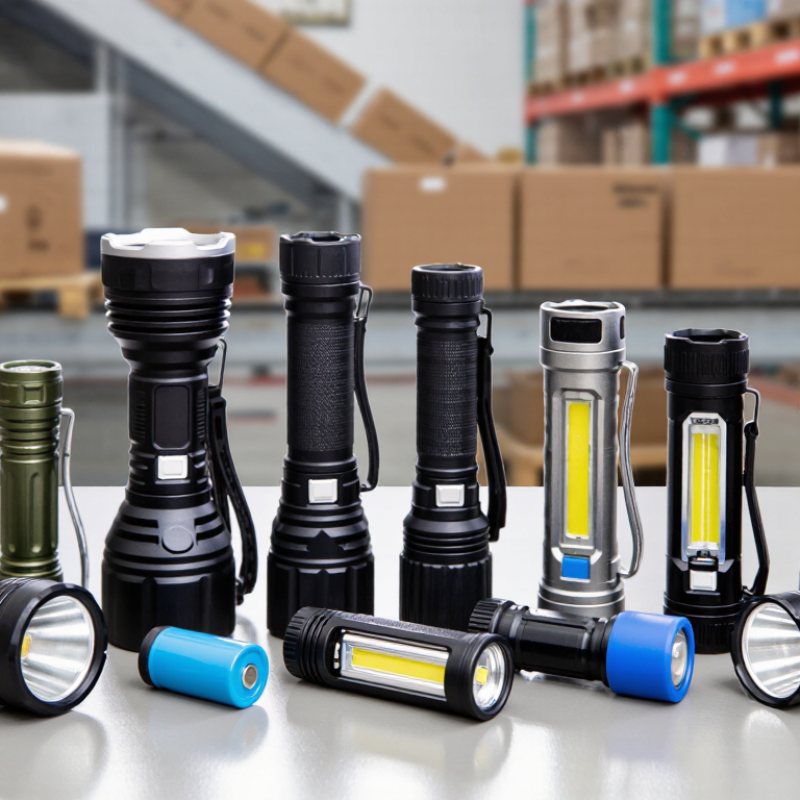
A reliable LED torch supplier in China is defined by repeatable evidence, not a polished catalogue. During sample reviews, buyers should measure beam distance, runtime, charging temperature, and switch durability. A bright first impression is not enough. The supplier should provide test records tied to each batch, not a generic PDF. This discipline matters because the International Energy Agency’s Energy Efficiency 2024 report states that LEDs represent about half of global lighting sales.
Technical competence appears in component selection and honest performance claims. Ask for lumen measurements under a stated test method, battery-capacity verification, ingress-protection evidence, and thermal test results. IEC 62471 supports photobiological safety assessment, while IEC 60529 defines IP protection ratings. A serious factory understands both standards and explains where they apply. It should also control incoming cells, solder joints, seals, and final assembly through documented inspections.
Reliability also lives in communication after purchase. A capable supplier shares production schedules, carton photos, corrective-action reports, and replacement procedures. The ISO Survey 2023 recorded more than 1.2 million valid ISO 9001 certificates worldwide, yet certification alone cannot prove torch quality. That is the uncomfortable part. Independent pre-shipment inspection remains sensible, especially for large orders. Buyers should compare samples from different production dates, because one excellent unit may be luck.
Best LED Torch Supplier in China for Global Buyers
Key Products and Technologies Offered by Leading Suppliers
Leading Chinese suppliers now offer compact keychain torches, tactical models, headlamps, work lights, and searchlights. Their strongest products combine high-output LEDs with precision reflectors, regulated drivers, and rechargeable lithium-ion cells. USB-C charging is increasingly common. It simplifies charging across travel, outdoor, and industrial applications.
The U.S. Department of Energy reports that LED lighting can use at least 75% less energy and last up to 25 times longer than incandescent lighting. This advantage depends on thermal design. Heat changes everything. Quality suppliers use aluminum housings, copper boards, thermal sensors, and stepped brightness controls. These features help reduce overheating and output decline during extended use.
Reliable exporters should document ANSI FL1 performance, battery protection, and ingress testing under IEC 60529. An IP68 claim, for example, should match verifiable test conditions rather than a marketing label. IEC 62471 testing can also support safer photobiological risk assessment for powerful beams. Buyers should request beam-distance measurements, runtime curves, charging-cycle data, and sample inspection records. Claimed lumens may look impressive. They do not always survive real field testing. A supplier with stable production records, traceable components, and clear corrective-action procedures offers stronger long-term reliability. Supplier documentation can still be incomplete, so independent verification remains necessary.
| Product Category | Typical LED Output | Power and Charging Options | Typical Runtime | Housing and Protection | Key Technologies | Common Applications | Relevant Buyer Requirements |
|---|---|---|---|---|---|---|---|
| Tactical LED Flashlight | 300–2,000 lumens Beam distance commonly up to 300 m | Rechargeable lithium-ion battery or replaceable alkaline cells USB-C charging available on many models | Approximately 2–30 hours, depending on output mode | Anodized aluminum alloy Common protection levels: IPX4 to IPX8 | Multiple brightness modes Strobe mode Thermal regulation Tail switch | Outdoor use, security, emergency preparedness, camping and industrial inspection | Beam consistency, switch durability, battery safety, drop resistance and waterproof performance |
| Rechargeable Work Light | 500–3,000 lumens Wide-area illumination | Built-in lithium-ion battery USB-C or AC charging; some models support power-bank output | Approximately 3–20 hours | Impact-resistant ABS or aluminum housing Typical ratings: IP54 to IP65 | COB LED panel Folding stand Magnetic base Battery indicator | Construction, workshops, vehicle maintenance, warehouses and emergency lighting | Stable base design, heat dissipation, charging protection, handle strength and replaceable components |
| LED Headlamp | 150–1,500 lumens Spot, flood or combined beam | AAA batteries or rechargeable lithium-ion battery USB charging is widely available | Approximately 2–40 hours, depending on mode and battery type | Lightweight ABS or aluminum body Common protection levels: IPX4 to IPX8 | Adjustable beam angle Motion sensor Red-light mode Memory function | Running, hiking, mining, maintenance, camping and hands-free work | Headband comfort, balanced weight, battery compartment sealing and reliable mode control |
| Solar Emergency Lantern | 50–500 lumens Diffuse area lighting | Integrated rechargeable battery Solar panel, USB charging and manual crank options may be included | Approximately 4–100 hours, depending on brightness and battery capacity | ABS housing with impact-resistant lens Typical protection levels: IPX4 to IPX6 | Solar charging USB output SOS function Battery indicator | Power outages, disaster preparedness, camping, humanitarian distribution and household use | Battery capacity accuracy, solar charging efficiency, storage life, handle strength and safety certification |
| LED Inspection Penlight | 50–300 lumens Narrow, controlled beam | AAA or rechargeable lithium-ion battery USB charging available on selected designs | Approximately 2–15 hours | Compact aluminum or reinforced polymer body Typical protection levels: IP54 to IP67 | High color rendering option Pocket clip Magnetic tail cap Focused optics | Automotive service, electrical maintenance, medical examination and equipment inspection | Color rendering, optical uniformity, clip reliability, pocket size and chemical resistance |
| High-Output Searchlight | 1,000–10,000 lumens Long-range beam performance | High-capacity rechargeable lithium-ion battery pack USB-C or dedicated adapter charging | Approximately 1.5–15 hours, depending on output level | Reinforced aluminum or ABS housing Typical protection levels: IPX4 to IPX7 | Deep reflector optics Overheat protection Battery management system Shoulder strap | Search and rescue, marine operations, security, outdoor work and emergency response | Long-distance beam, charging reliability, thermal management, battery transport compliance and impact resistance |
| Explosion-Protected Industrial Torch | 100–600 lumens Designed for controlled industrial illumination | Alkaline batteries or certified rechargeable battery packs | Approximately 6–40 hours | Impact-resistant polymer or aluminum housing May be certified for hazardous locations | Intrinsically safe design Anti-static materials Sealed switches Low-temperature operation | Oil and gas facilities, chemical plants, utilities, mining and industrial maintenance | Required hazardous-location certification, temperature class, gas or dust group, ingress protection and traceability |
| Custom OEM/ODM LED Torch | Typically 50–10,000 lumens, based on product design | Alkaline, Ni-MH or lithium-ion battery systems USB-C, wireless or dedicated charging solutions | Specified according to LED driver, battery capacity and operating profile | ABS, PC, aluminum alloy, stainless steel or mixed-material construction | Custom optics Logo and packaging Firmware control Mold development | Retail programs, promotional products, professional equipment and private-label distribution | Prototype approval, minimum order quantity, tooling ownership, test reports, packaging compliance and quality inspection |
Choosing the best LED torch supplier in China requires more than comparing factory prices. During sample reviews, inspect the beam, switch, body joints, charging port, and lens under daily-use conditions. Small defects often appear after repeated drops or heat exposure. Ask for production records, not only polished samples. Real evidence matters.
An experienced manufacturer should control LED binning, thermal design, soldering, sealing, and final inspection. Request measurable data, such as lumen testing, runtime curves, battery capacity, and water-resistance results. Check whether instruments are calibrated and whether operators record rejected units. One useful audit is tracing a random carton back to its component batch. If the factory cannot explain that path, quality control may be informal.
Compliance needs equal attention. Confirm the exact market requirements for electrical safety, electromagnetic compatibility, chemical restrictions, labels, and packaging. Ask for current test reports matching the final model, not a similar housing. For rechargeable products, verify battery documentation and applicable transport testing. An audit report alone is not proof. Visit the line, speak with inspectors, and compare approved samples with mass production. I have seen suppliers pass a first inspection, then change a component without notice. That risk deserves a written change-control clause. Perfect paperwork can still hide weak assembly. Keep independent sampling in the purchase plan.
For global buyers, choosing a reliable LED torch supplier in China involves more than comparing unit prices. An experienced supplier should clarify brightness, battery type, beam distance, housing material, and expected quantity before preparing a quotation. Sample orders help buyers check grip comfort, switch response, charging time, and packaging quality. The first sample is rarely perfect. Small details often need revision.
Customization may include logo placement, color matching, body texture, packaging artwork, lanyards, and user manuals. A professional factory should provide drawings or digital proofs before production begins. It should also explain minimum order quantities, sample fees, tooling costs, and production schedules clearly. Practical quality checks can cover waterproof performance, charging safety, drop resistance, lumen consistency, and battery protection. However, inspection is not always flawless. Buyers should request photos, test records, and pre-shipment approval.
Export service should remain simple and traceable. Suppliers can support commercial invoices, packing lists, carton marks, shipping coordination, and destination-specific documentation. Packaging should protect each torch from scratches, pressure, and accidental activation during transit. Buyers should confirm the correct shipping term, carton dimensions, product classification, and applicable safety requirements before payment. A responsive export team also reports delays early, rather than hiding them. Good communication matters. Clear specifications prevent expensive misunderstandings across time zones.
Best LED Torch Supplier in China for Global Buyers
When comparing LED torch suppliers in China, unit price should not stand alone. A low quote may exclude batteries, chargers, packaging, or export-ready cartons. Request a complete quotation with product specifications, testing details, shipping terms, and replacement policies. I once focused too heavily on the lowest price and missed a costly packaging change. That mistake changed my buying checklist.
Minimum order quantities also need careful review. Some suppliers accept 100 pieces for samples, while bulk production may require 1,000 or more. Ask whether mixed colors, beam types, or custom packaging affect the MOQ. Smaller trial orders reduce inventory risk, but their unit prices are usually higher. Samples reveal more. Test brightness, switch response, charging time, and heat after continuous use.
Supplier support often separates a dependable factory from a difficult transaction. Reliable teams provide clear drawings, sample feedback, production photos, inspection options, and stable shipping updates. Check how quickly they answer technical questions, not only sales messages. After-sales support should cover damaged units, missing parts, and reasonable claim procedures. Documentation should be organized and accurate for your market. However, supplier promises are not proof. Confirm details through samples, written agreements, and pre-shipment checks. Even experienced buyers can overlook small details when deadlines become tight.
