
Choosing the best whiskey filtration system in 2026 requires more than comparing micron ratings or stainless-steel housings. It requires understanding how filtration affects aroma, texture, clarity, yield, and production consistency. IWSR Drinks Market Analysis continues to identify premiumization as a major force in global beverage alcohol. That trend raises the value of careful processing. A filtration choice can protect a delicate vanilla note, but it can also remove desirable oils and mouthfeel.
Recent market research from Grand View Research describes whiskey as a mature yet expanding global spirits category, supported by premium products, innovation, and broader international demand. These conditions make whiskey filtration a practical quality-control decision, not merely an equipment purchase. In a working distillery, the difference may appear in a bright sample under white light, a cleaner finish, or less sediment after storage. Small details matter.
Still, no system is universally best. Depth filtration, cartridge filtration, membrane systems, and chill filtration serve different goals. The American Society of Brewing Chemists and technical suppliers commonly emphasize controlled testing, sanitation, and process validation. However, published performance figures do not always reflect real-world whiskey production. Flow rate may fall when solids accumulate. A system that looks efficient on paper may waste product during changeovers. That deserves honest attention.
This guide evaluates whiskey filtration systems through practical criteria, including contaminant control, flavor retention, maintenance, scalability, and operating cost. It also considers producer experience and current industry evidence. The final choice should fit the spirit, the facility, and the intended bottle—not just the marketing brochure.
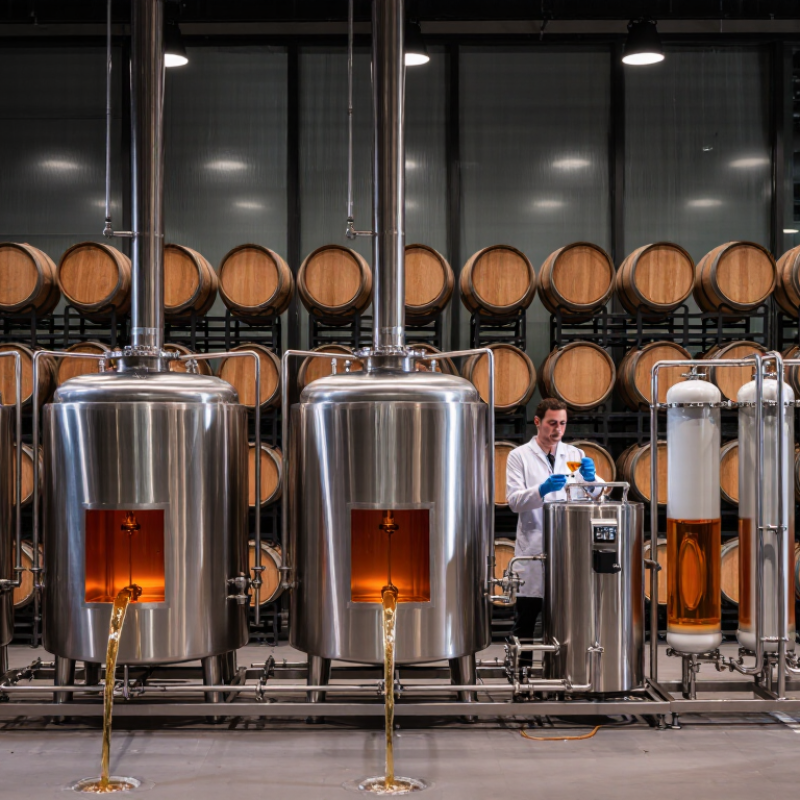
Whiskey filtration protects clarity, stability, and consumer appearance. It does not automatically improve flavor. The right system depends on whiskey style, temperature, throughput, and desired texture.
Depth filtration uses cellulose or other food-grade media to remove visible particles. Cartridge filtration provides tighter control. Membrane systems can remove very small suspended materials, but they require careful pressure management.
Chill filtration removes fatty-acid esters that may create haze in cold conditions. That clarity can reduce mouthfeel. The trade-off is real.
A professional setup should monitor differential pressure, filter integrity, temperature, and dissolved oxygen. Excessive pressure may compact the media and slow production. Activated carbon can remove unwanted compounds, but it may also soften desirable aromas. That is where judgment matters.
The Scotch Whisky Association’s 2024 export report recorded approximately £5.6 billion in Scotch whisky exports during 2023, showing the scale of quality expectations across this category. Industry scale does not make every filtration choice correct.
Test the whiskey before and after filtration. Compare aroma, texture, color, and sediment after storage. Keep a batch record. A clear sample is not always a better sample. Pilot testing is wiser than copying a standard setting, and even experienced operators sometimes overlook flavor loss. Use food-contact materials, replace saturated media promptly, and verify the system under real production conditions.
The best whiskey filtration system in 2026 should balance filtration performance, flavor retention, and material safety. A clear spirit is not automatically a better spirit. Fine particles may be removed, but excessive filtration can also reduce aromatic esters and soften the whiskey’s character. Sensory panels should compare aroma, palate weight, finish length, and color before and after treatment. A 2023 review in Foods links volatile compounds, including esters and higher alcohols, with perceived fruitiness and complexity in distilled spirits.
Performance needs measurable evidence. Ask for flow rate, particle-size reduction, pressure limits, and repeatability data. A laboratory report is more useful than a glossy claim. The Scotch Whisky Technical File confirms that Scotch whisky must retain at least 40% alcohol by volume, so filtration should not create avoidable dilution. I would also check samples after storage, not only immediately after filtering. Flavor changes can appear later.
Material safety deserves equal attention. Contact surfaces should have documented food-contact compliance, migration testing, and batch traceability. The World Health Organization’s 2022 drinking-water guidelines set lead at 0.01 mg/L, a useful safety reference, although whiskey requires spirit-specific testing. Testing water alone is not enough. Alcohol can extract different substances from plastics, seals, or adhesives. I once overvalued visual clarity during product comparisons. That was a mistake. A slightly hazy sample may preserve more character, while a perfectly bright sample may taste thinner. Trade-offs remain.
Choosing the best whiskey filtration system depends on scale, flavor goals, and production controls. The Distilled Spirits Council’s 2024 Economic Briefing reported $37.2 billion in U.S. supplier sales and 316.5 million nine-liter cases. Consistency matters at that volume. Home users need gentler equipment.
In a practical evaluation, depth filters offer straightforward polishing for small batches. They can remove visible particles without heavily reducing aroma. Activated carbon requires caution. Excessive contact may flatten vanilla, oak, and spice notes.
Membrane systems provide tighter control, but their pressure demands and cleaning routines suit commercial operations better. My first instinct was to rank the finest membrane highest. That was too simplistic.
Look for food-contact materials, documented micron ratings, pressure limits, and replaceable cartridges. Sanitary fittings reduce contamination risks between batches. A small producer should measure flow rate with a graduated container, not trust marketing claims.
Commercial buyers should record turbidity, alcohol strength, temperature, and sensory changes before and after filtration. The Scotch Whisky Association’s 2024 export statistics reported £5.4 billion in exports and approximately 1.4 billion bottles, showing why repeatable processing matters.
Filtration does not repair poor distillation or unsafe storage. It cannot create maturity. A sample test remains essential. Results can disappoint. That is useful data.
What Is the Best Whiskey Filtration System in 2026?
The practical answer is a sanitary, staged depth-filtration system with adjustable pressure. Install it after blending and before bottling. Keep the unit level, fully drainable, and fitted with food-grade seals. The 2022 WHO Guidelines recommend turbidity below 1 NTU for effective treatment processes. That target is useful for process water, but whiskey requires sensory testing too.
During operation, begin with a coarse depth stage, then use a finer cartridge when clarity demands it. A 1–5 micron range often balances brightness and flavor retention.
Measure inlet pressure, outlet pressure, flow rate, and product temperature every batch. NSF/ANSI 42 covers aesthetic filtration performance, while NSF/ANSI 53 addresses specific health-related contaminants. Neither standard proves that a filter protects whiskey flavor. That part needs documented trials.
Cleaning should start immediately after the final run. Flush with compatible water, circulate the approved cleaning solution, rinse until neutral, and record conductivity. Never assume a clear cartridge is clean.
The Brewers Association’s Draught Beer Quality Manual links sanitation failures with flavor defects and microbiological risk, a useful lesson for spirit production. Replace cartridges when pressure rises, flow falls, or flavor changes appear.
The WQA 2024 consumer study also shows that taste strongly influences filtration decisions.
I agree, though my own trials reveal an uncomfortable truth: cleaner-looking whiskey is not always better whiskey.
Test retained samples after one week and one month.
Selecting the Right Whiskey Filtration System in 2026 starts with the whiskey itself. A delicate spirit needs gentler treatment than a cloudy, heavily extracted batch. Review the system’s filter medium, pore size, flow rate, and contact materials. Food-grade stainless steel and certified components offer stronger reliability than vague construction claims. Check the manufacturer’s testing information, not only marketing language.
Start with the liquid. Taste before filtering.
In practical trials, slow gravity filtration often preserves more aroma than aggressive pressure systems. A fine membrane can reduce visible particles, but it may also remove desirable oils and soft texture. Activated carbon requires extra caution because it can flatten oak, spice, and fruit notes. Choose adjustable flow control when possible. It allows small batches to be tested without wasting an entire production run. Record the original aroma, color, mouthfeel, and finish before making changes. Simple notes can reveal losses that the eye misses.
I have also over-filtered whiskey by chasing perfect clarity. The result looked polished but tasted thin. That mistake changed my selection criteria. The best system is not always the fastest or finest. It should match your batch size, cleaning routine, target flavor, and available storage space. Look for replaceable elements, clear maintenance instructions, and a design that prevents leaks. Confirm that every wetted part is suitable for food contact. A filtration system should improve control, not hide problems created during maturation, blending, or storage.
| Filtration System | Typical Filter Rating | Primary Removal Function | Typical Throughput | Flavor Impact | Typical Operating Conditions | Best Application | Overall Suitability |
|---|---|---|---|---|---|---|---|
| Depth Filter | 1–5 micrometres | Removes suspended particles, barrel sediment, and visible haze | Approximately 100–1,000 litres per hour per square metre of filter area | Low when correctly sized | Ambient temperature; low to moderate pressure | General polishing before bottling | Best overall balance |
| Membrane Filter | 0.2–1.0 micrometres | Fine particulate removal and, with suitable membranes, microbial reduction | Approximately 50–500 litres per hour per square metre of membrane area | Low, although flow restriction can increase with dirty spirit | Usually ambient temperature; controlled pressure required | High-clarity finishing and controlled production | Best for fine clarity |
| Plate-and-Frame Filter | 1–10 micrometres, depending on media | Removes particles and haze-forming solids through replaceable depth sheets | Approximately 500–5,000 litres per hour, depending on plate area and solids load | Low to moderate | Ambient temperature; moderate pump pressure | Small and medium production batches | Best for flexible batch work |
| Activated Carbon Filter | Usually specified by carbon bed depth rather than pore size | Adsorbs selected color compounds, sulfur-related notes, and some flavor-active congeners | Approximately 20–200 litres per hour per square metre of bed area | Moderate to high if contact time is excessive | Ambient temperature; controlled contact time is essential | Correcting unwanted odors or excessive color | Use selectively |
| Chill Filtration | Usually followed by approximately 1–5 micrometre filtration | Reduces fatty-acid ester haze and flocculation that may appear after dilution or cooling | Approximately 100–1,000 litres per hour per square metre, depending on viscosity and filter area | Low to moderate; some texture and aroma compounds may be reduced | Commonly around 0–10°C before polishing | Consistent visual clarity during storage and transport | Best for haze control |
| Centrifugal Separator | No fixed pore rating; separation depends on particle size and density | Separates denser solids and coarse sediment without disposable filter media | Approximately 500–10,000 litres per hour, depending on equipment size | Very low for coarse-particle separation | Usually ambient temperature; continuous operation is possible | Pre-treatment before depth or membrane filtration | Best for high solids loads |
